4 functions, already listed
Suwal Pathai, Haldi, Dhooliarghya & Phere and Reception are set up for you. Give each one a date, time and venue, or switch off what you aren't hosting.
Hindu wedding template
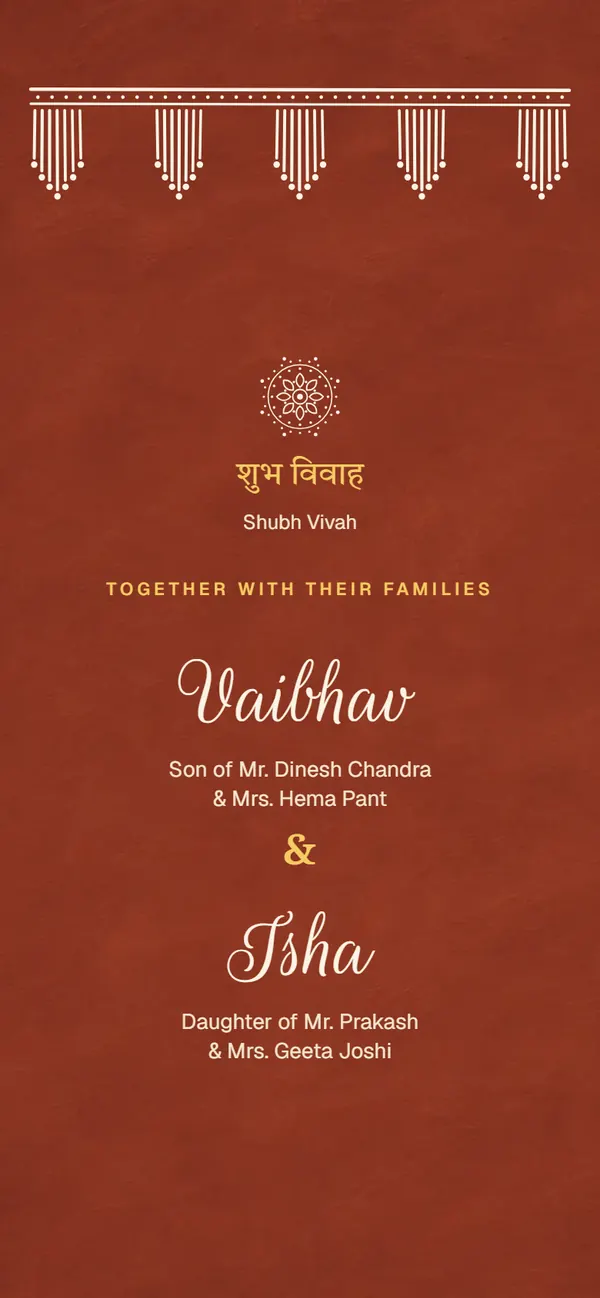
A Kumaoni wedding at a carved likhai door: step through and white Aipan lines draw themselves on red geru over your names.
Live preview with sample details
Scroll inside the phone to see every section
A Kumaoni wedding invitation from Uttarakhand, built on Aipan, the white rice-paste line work Kumaoni families draw on red-ochre geru. Guests arrive at a carved walnut likhai door with the date and the town in its doorway. One tap starts the music: the view moves through the door, white vasudhara lines draw down from the top, a chowki medallion draws itself and settles above your names, and turmeric petals and rice grains fall. शुभ विवाह (Shubh Vivah) heads the couple's page. Inside, pages alternate geru with Aipan borders and rice-ivory paper with buransh and a brass diya, and the Suwal Pathai, Haldi, Dhooliarghya and Phere and the Reception each get their own card with Get directions.
Screens from the live invitation with sample names, in the order guests scroll through them. Yours shows your own names, dates and venues.
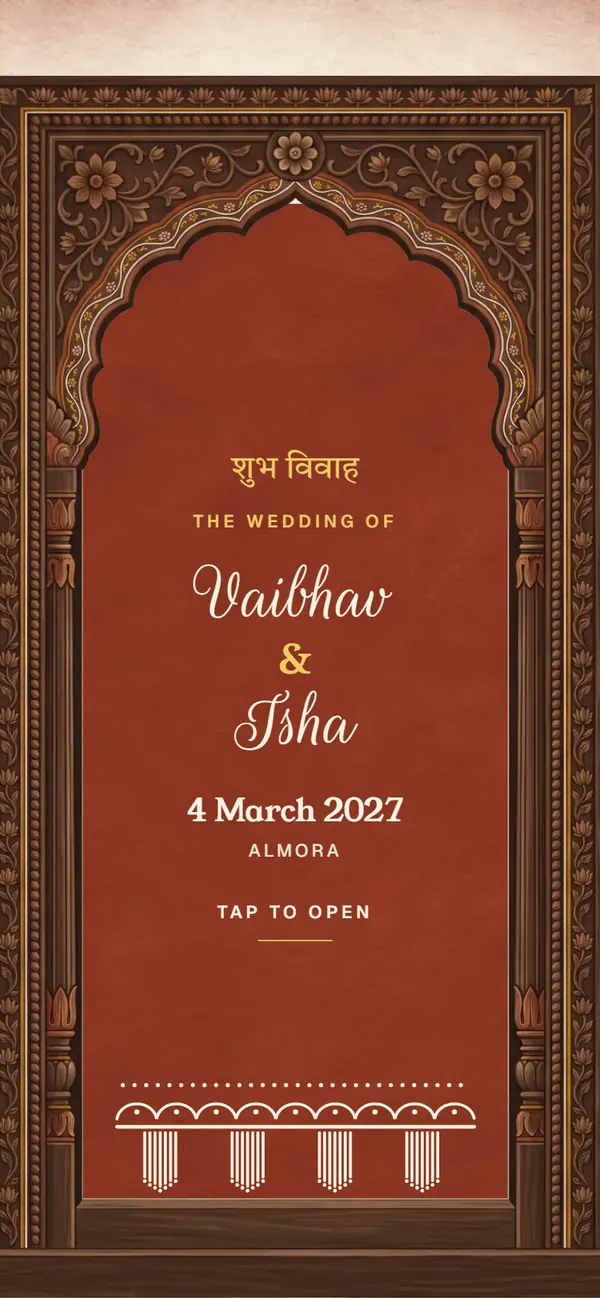
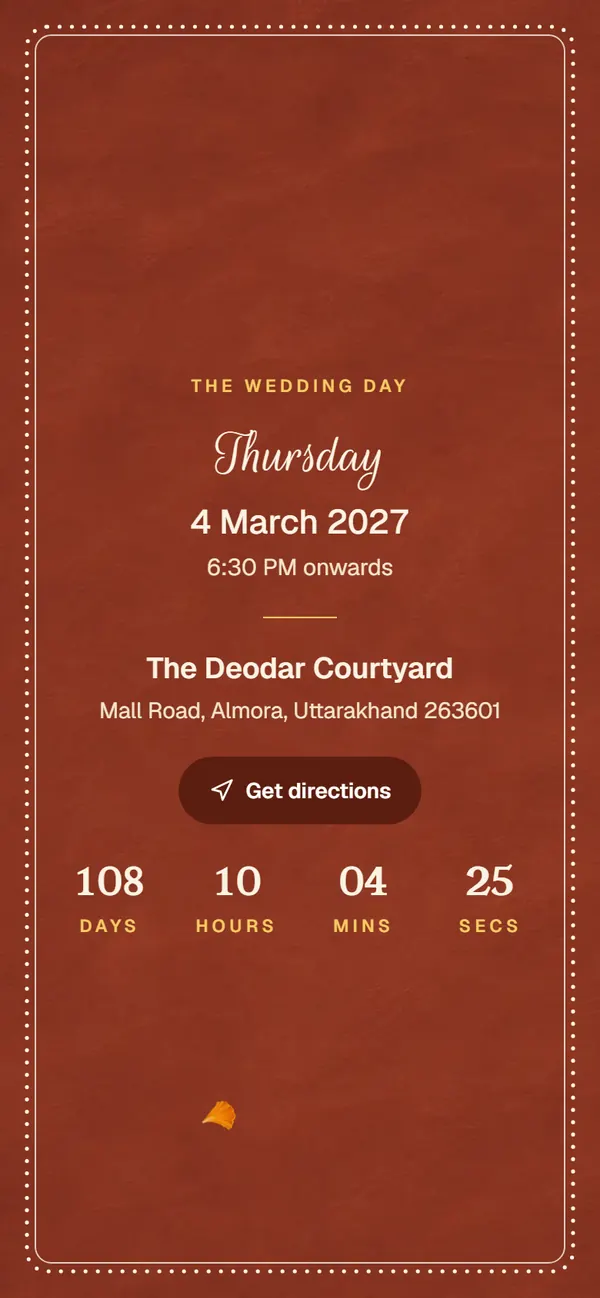
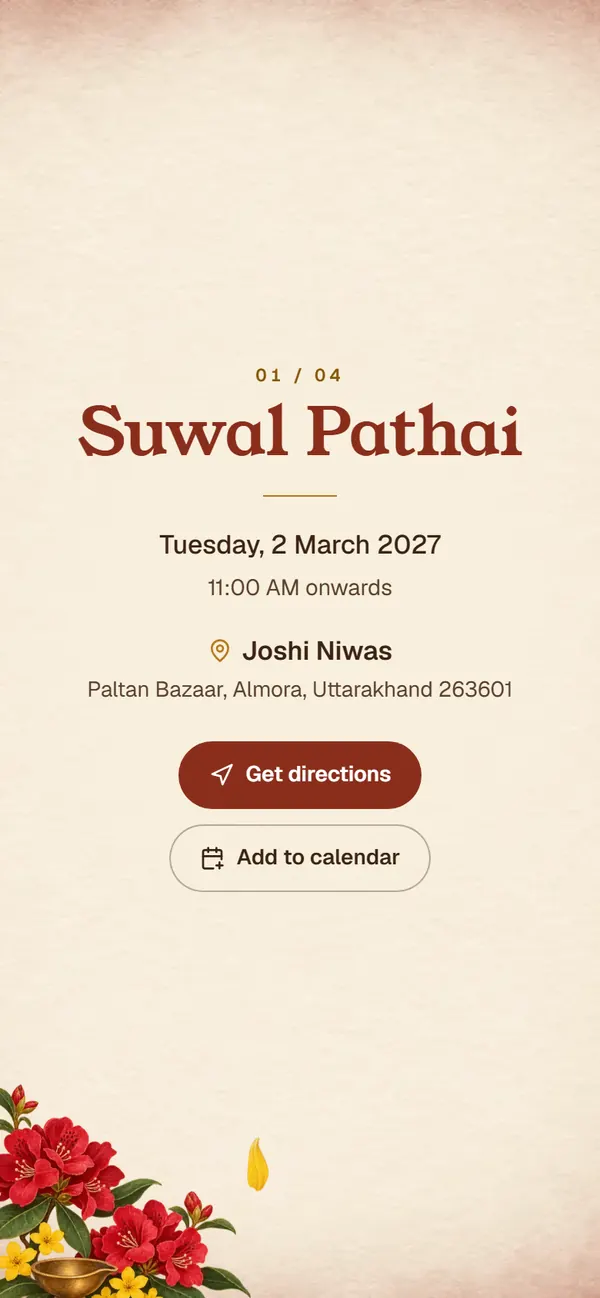
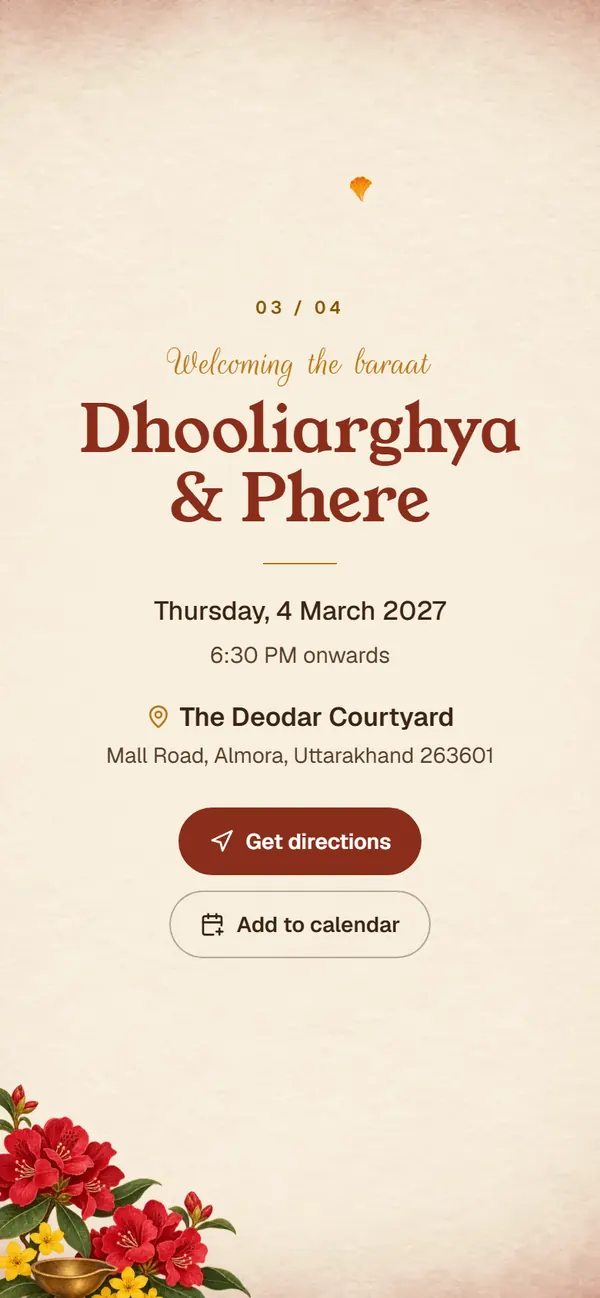

Everything your guests need sits on one page, and everything you fill in is already laid out for you.
Suwal Pathai, Haldi, Dhooliarghya & Phere and Reception are set up for you. Give each one a date, time and venue, or switch off what you aren't hosting.
Your names sit under the blessing, followed by your welcome message: write it in English, Hindi or both.
Paste a Google Maps link or just the address. Functions held at home can be marked “at home”.
Add one or more phone numbers for the bride's and groom's sides. Guests tap to call.
Preview it exactly as guests will see it, then copy the link or send it straight to WhatsApp.
A Kumaoni wedding starts days before the pheras with the Suwal Pathai at home, and the wedding day itself begins at dusk with the Dhooliarghya, when the bride's family welcomes the baraat. Guests coming from Haldwani, Delhi or further want to know which home each function is at and when the baraat is expected. Here's what to fill in for each function.
At the Suwal Pathai the women of the family roll the suwal and make laddoos, singing as they work, often one, three or five days before the wedding. Switch on “at home” and give the day and time.
A morning function at each family's home, with turmeric and the women's maangal songs before the bath. Switch on “at home” and give the time.
The Dhooliarghya falls at godhuli, the hour of dusk, when the bride's father welcomes the baraat and washes the groom's feet; the pheras follow. Give the time the baraat is expected and the venue's Maps link, and put the time of the pheras in the welcome message if they run late.
If you host a reception or pritibhoj later, in Haldwani, Delhi or wherever most guests live, give it its own date, time and venue: it can be days after the wedding.
Copy a line into your welcome message and change the names in brackets.
With the blessings of our elders, we invite you to Almora for the wedding of our children. Come for the suwal and the songs, stay for the pheras, and bless the couple with us.
शुभ विवाह
Shubh Vivah: an auspicious wedding, written above your names on the Aipan invitation.
The baraat reaches us at godhuli on Thursday: please be with us for the Dhooliarghya.
Every design has the same features. They differ in look, opening blessing and the functions they start with.
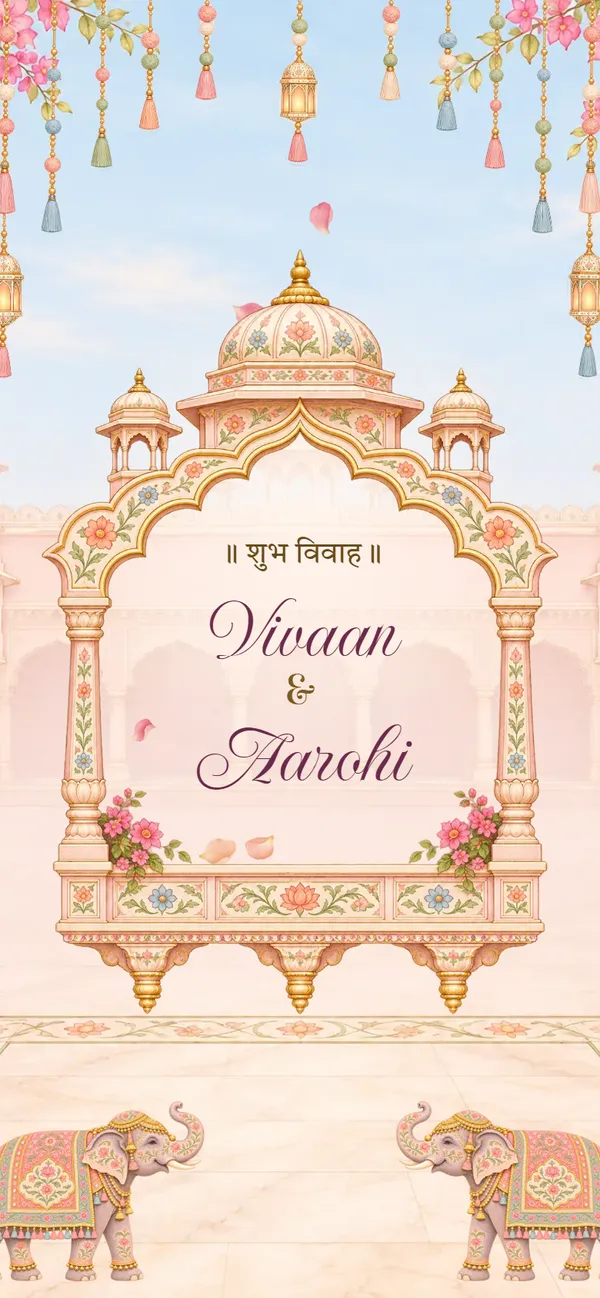
Rang Mahal
Hindu
Free to try · Regular price ₹499 Now ₹99Haldi · Mehendi · Sangeet · Wedding · Reception
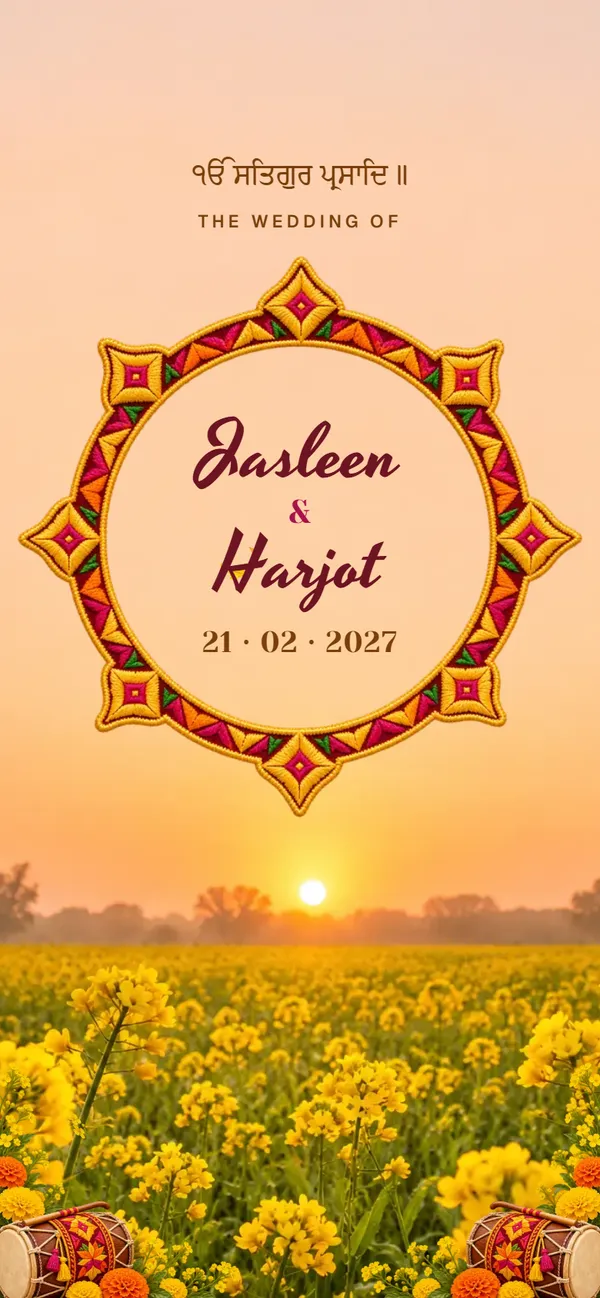
Phulkari
Sikh
Free to try · Regular price ₹499 Now ₹99Roka & Shagun · Mehndi & Sangeet · Jaggo · Chooda & Kalire · Anand Karaj · Reception

Noor Nikah
Muslim
Free to try · Regular price ₹499 Now ₹99Haldi · Mehndi · Nikah · Walima

Kankotri
Hindu
Free to try · Regular price ₹499 Now ₹99Ganesh Sthapana · Mameru · Mehndi · Garba · Hast Melap · Reception

Ring Ceremony Blush
Engagement
Free to try · Regular price ₹299 Now ₹99Roka · Ring · Dinner
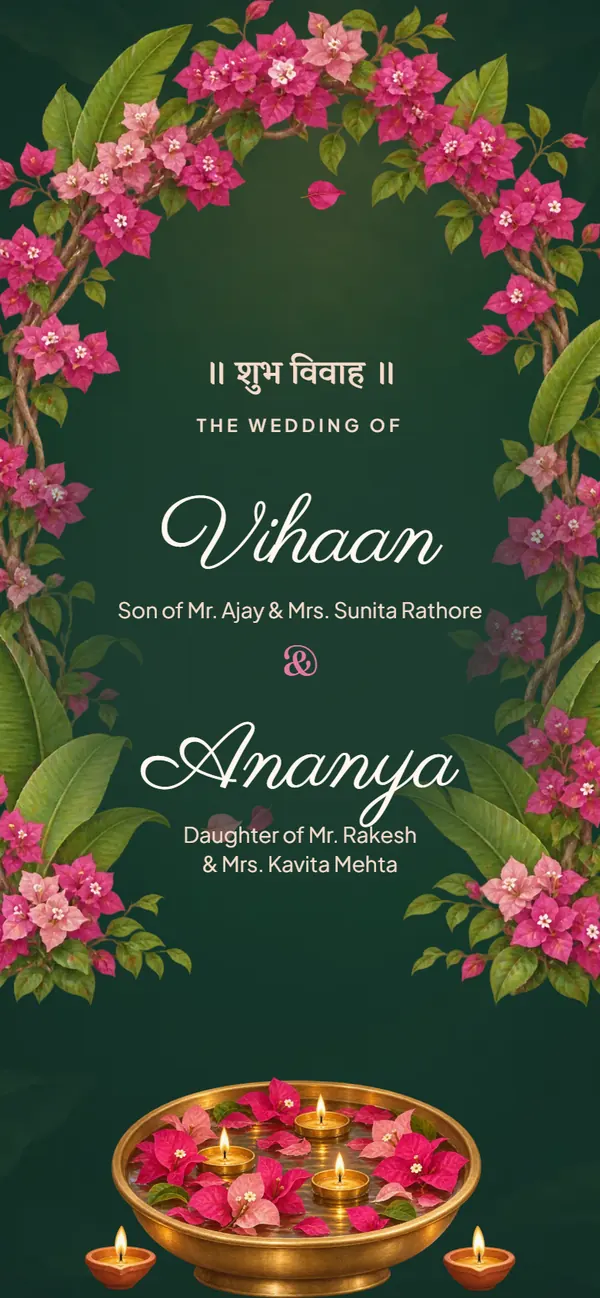
Gulabi Bagh
Hindu
Free to try · Regular price ₹499 Now ₹99Haldi · Mehendi · Sangeet · Wedding · Reception

Mor Sarovar
Hindu
Free to try · Regular price ₹499 Now ₹99Haldi · Mehendi · Sangeet · Wedding · Reception

Shahi Mehfil
Hindu
Free to try · Regular price ₹499 Now ₹99Haldi · Mehendi · Sangeet · Wedding · Reception

Mallige
Hindu
Free to try · Regular price ₹499 Now ₹99Nichayathartham · Mehendi · Sangeet · Muhurtham · Reception
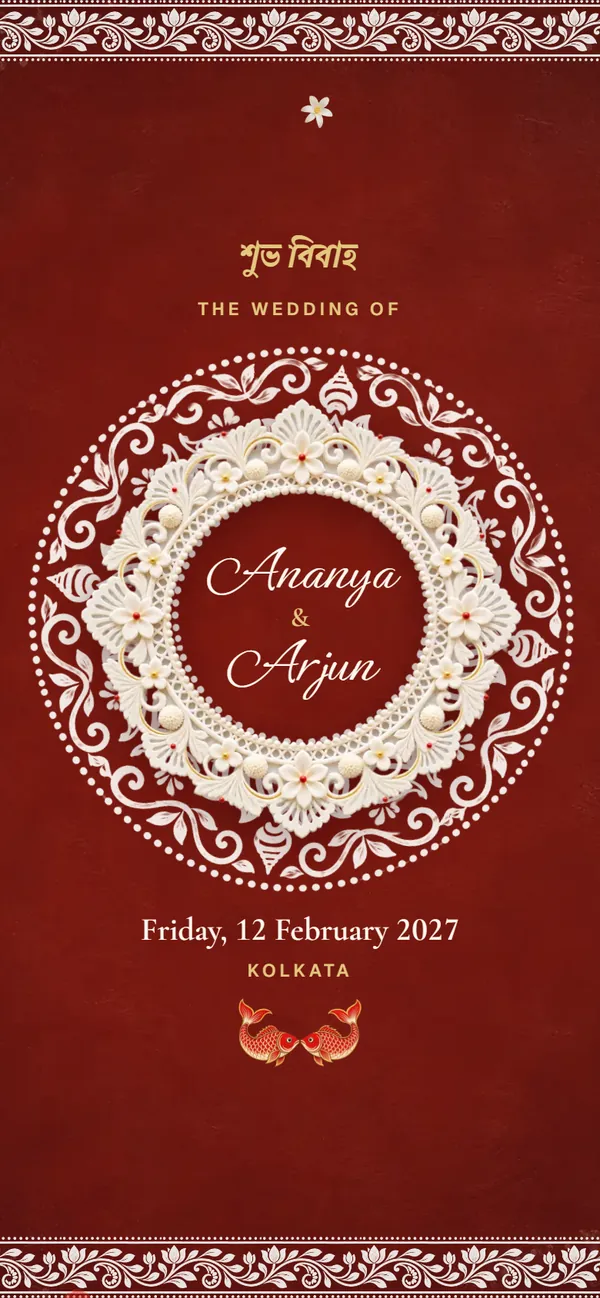
Alpona
Hindu
Free to try · Regular price ₹499 Now ₹99Aashirbad · Gaye Holud · Biye · Bou Bhaat
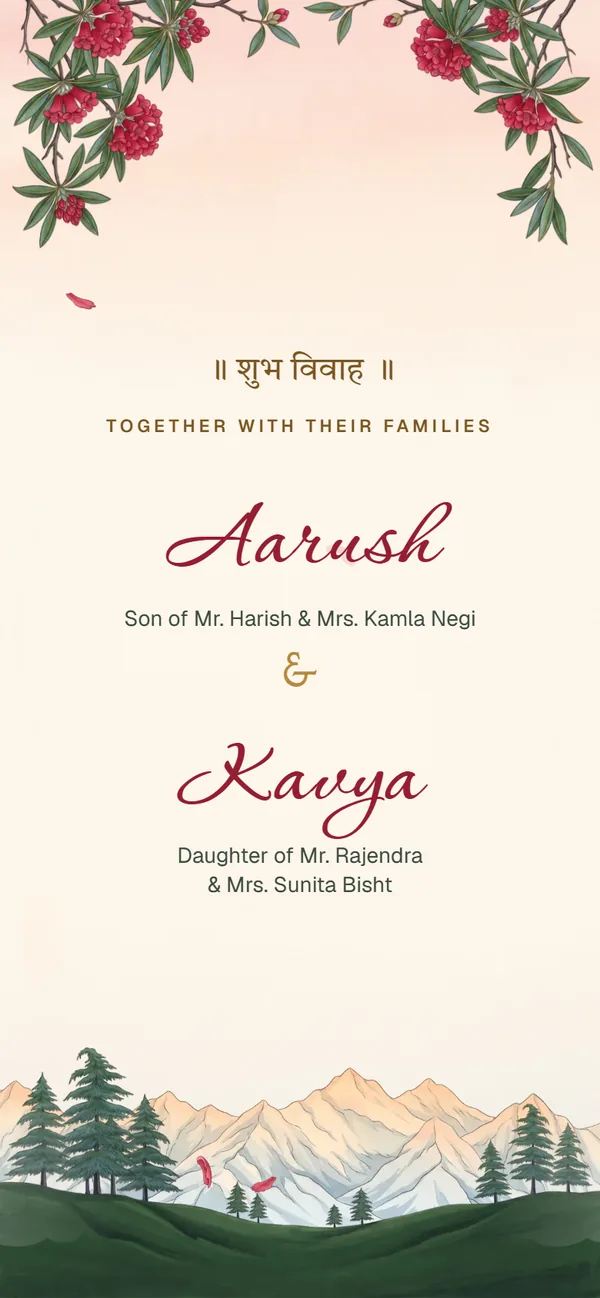
Buransh
Hindu
Free to try · Regular price ₹499 Now ₹99Haldi Haath · Mehendi · Baraat & Phere · Reception
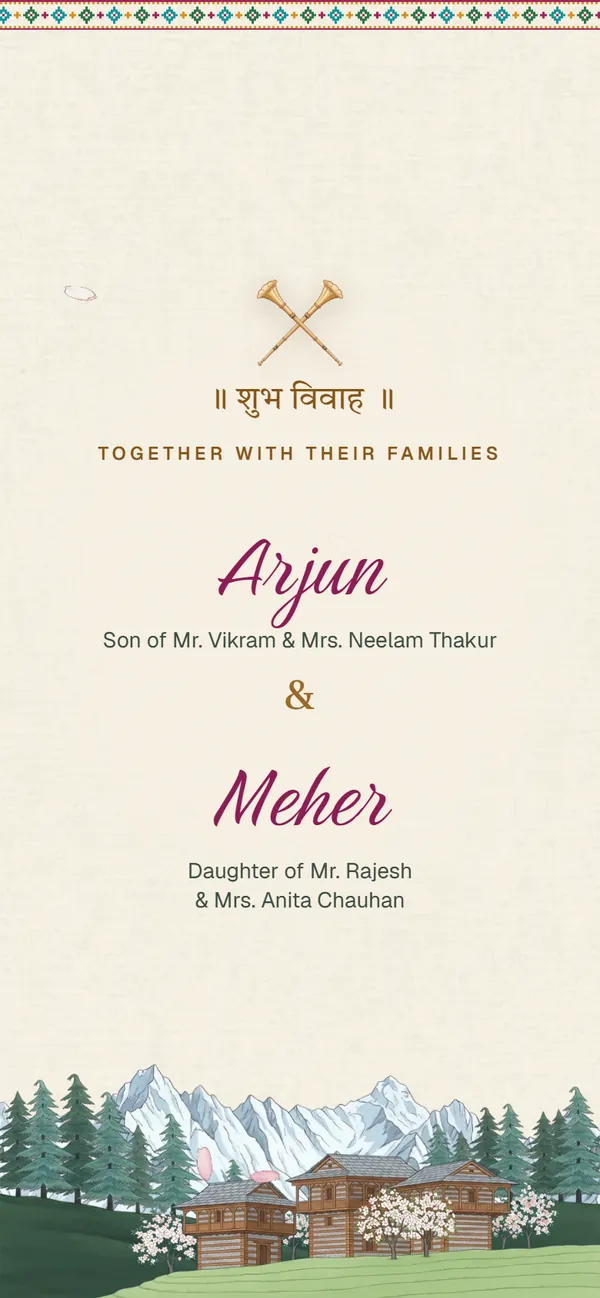
Kullu Pattu
Hindu
Free to try · Regular price ₹499 Now ₹99Haldi · Mehendi · Baraat & Phere · Dham

Christian Classic
Christian
Free to try · Regular price ₹499 Now ₹99Engagement · Bridal Shower · Roce · Holy Matrimony · Reception
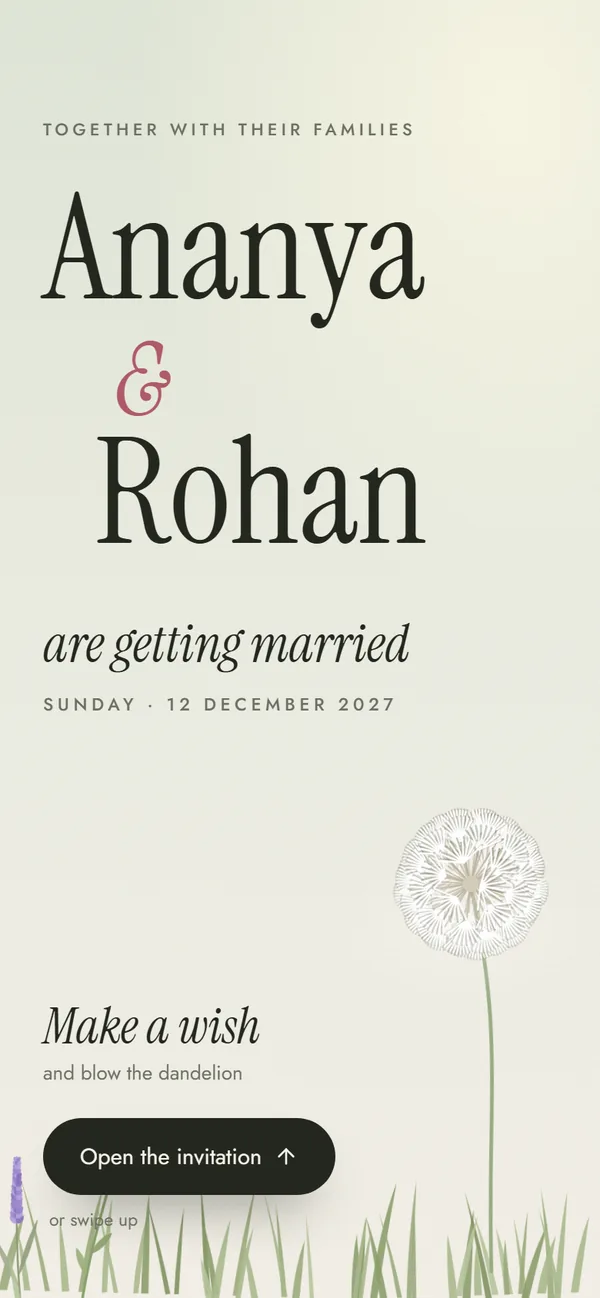
Modern Minimal
Any tradition
Free to try · Regular price ₹499 Now ₹99Welcome Drinks · Mehendi · Wedding · Reception · After-Party
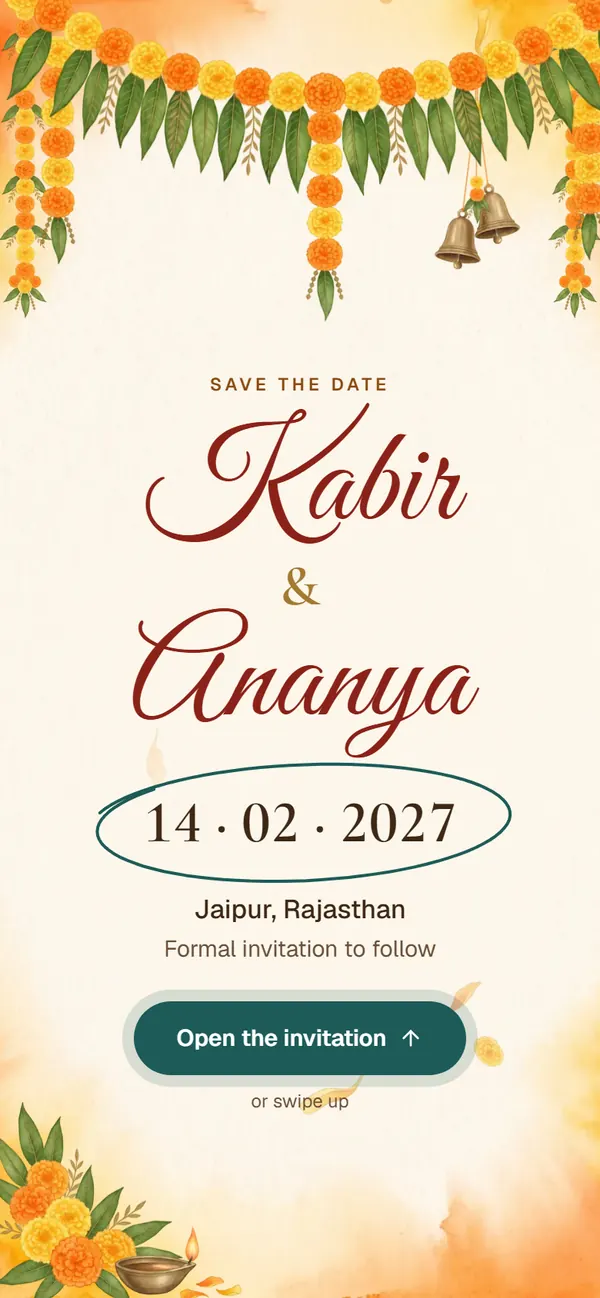
Marigold Save the Date
Save the date
Free to try · Regular price ₹299 Now ₹99Wedding
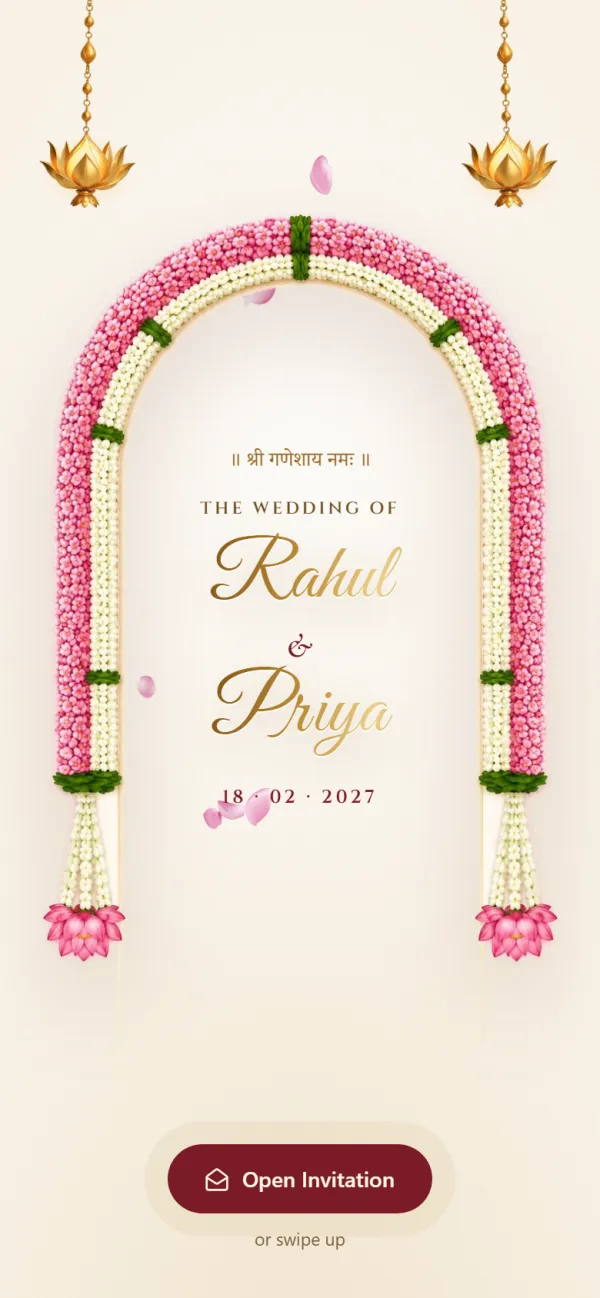
Hindu Traditional
Hindu
Free to try · Regular price ₹499 Now ₹99Haldi · Mehendi · Sangeet · Wedding · Reception

Hindu Royal
Hindu
Free to try · Regular price ₹499 Now ₹99Tilak · Haldi · Mehendi · Sangeet · Baraat · Royal Wedding · Grand Reception
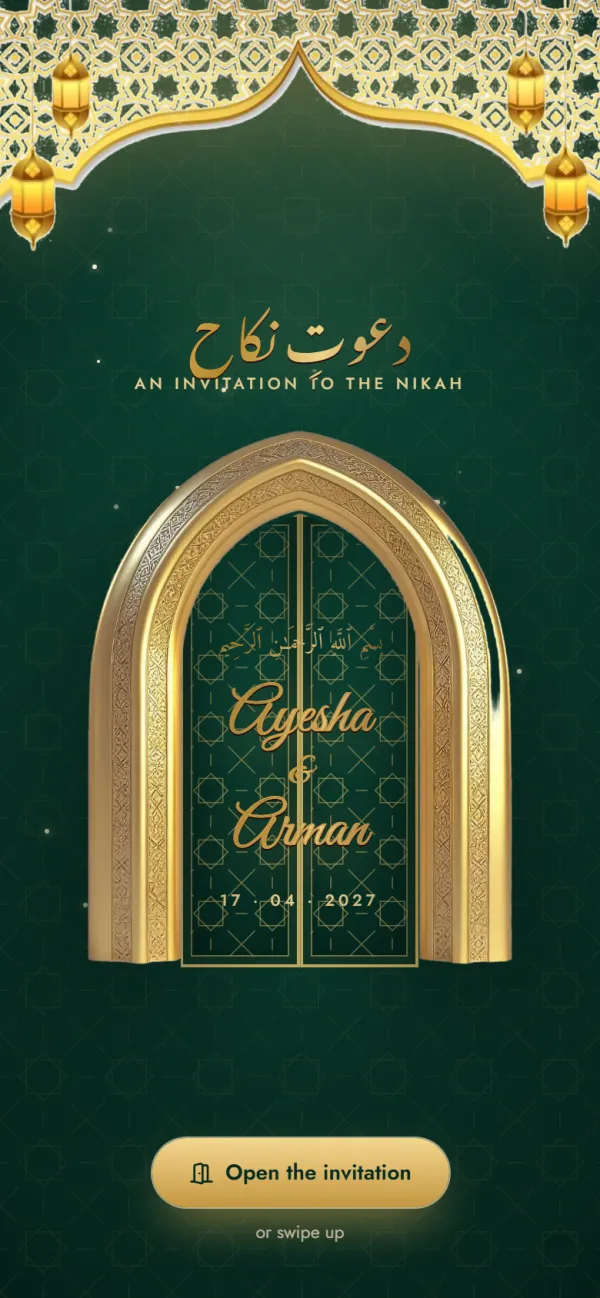
Muslim Elegant
Muslim
Free to try · Regular price ₹499 Now ₹99Mehndi · Nikah · Walima Reception
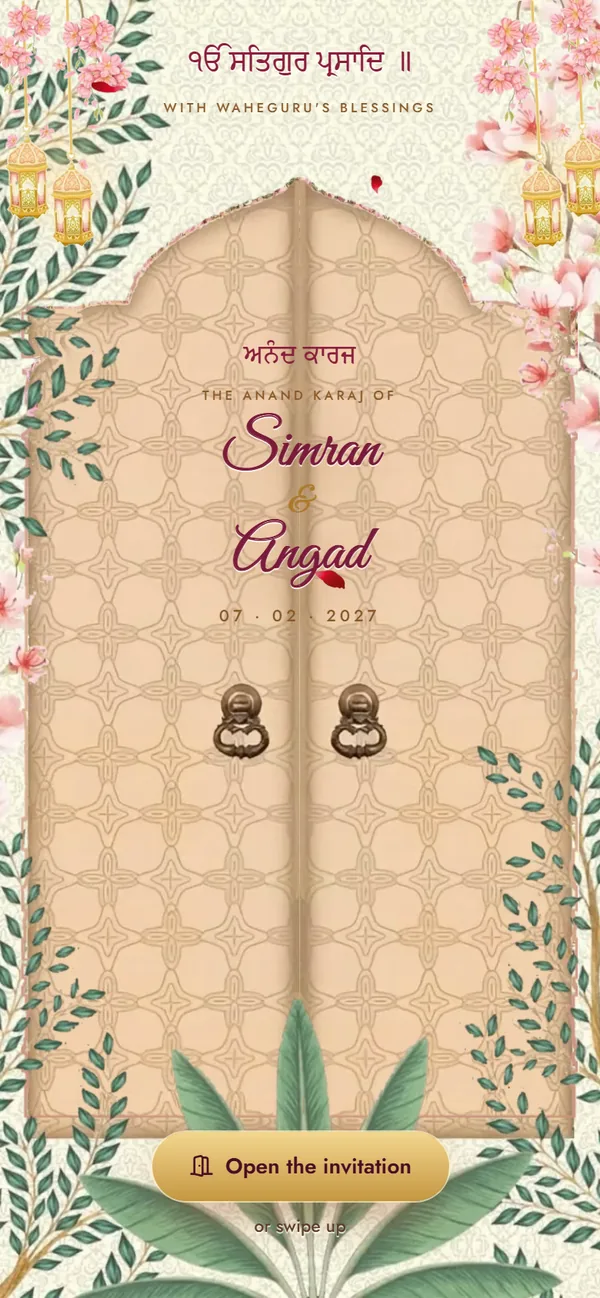
Sikh Vibrant
Sikh
Free to try · Regular price ₹499 Now ₹99Sehaj Path Bhog · Mehndi & Sangeet · Maiyan · Jaggo · Chooda & Kalire · Anand Karaj · Reception
What you can change, what's included and how guests open it.
It opens with शुभ विवाह above your names, followed by your welcome message (it begins with शुभ विवाह, and you can edit it). 4 functions are already listed: Suwal Pathai, Haldi, Dhooliarghya & Phere and Reception, each with a date, time, venue, address, an optional Google Maps link and an “at home” switch. Below them come the bride's and groom's families with one-tap call buttons, an optional “our story” section and your closing message.
They arrive at a carved walnut likhai door, the kind on old Kumaoni houses, with शुभ विवाह, your names, the date and the town in its red geru doorway over a doorstep band of white Aipan. One tap starts the music: the view moves through the door, white vasudhara lines draw down from the top, a chowki medallion draws itself and settles small above your names, turmeric petals and rice grains fall, and your names are written in, each with a line for the parents. It takes a few seconds and plays the same in WhatsApp's browser. The Aipan is drawn line by line in the invitation itself, not a picture. Further down, the wedding day sits inside a dotted Aipan border with a live countdown, and Suwal Pathai, Haldi, Dhooliarghya & Phere and Reception each get their own card with Get directions. On phones set to reduce motion, the invitation opens straight away.
Tap “Use this design”. Enter both names and family names, then fill in each function's date, time and venue: the date and time you type in the first function fill in the others. Add phone numbers for each side and preview the invitation free. When it looks right, get your link (a one-time ₹99) and share it on WhatsApp. No sign-up is needed.
No. The design's colours and fonts are fixed. You can change all of the wording (names, families, functions, venues, phone numbers and messages), and you can switch to another template while you're editing if you'd like a different look.
You can switch off any of the 4 listed functions and it won't appear on the invitation. Adding new functions isn't available yet, so if your wedding needs one this design doesn't list, try another template.
Yes. It's a web link that opens in the phone's browser, so guests don't install anything. Directions buttons open Google Maps, and call buttons open the phone's dialler.
Add your names, functions, venues and family numbers and preview it free. Get your link for ₹99 when you love it.
Aipan
Free to try · ₹99 to share till 16 Dec