5 functions, already listed
Haldi, Mehendi, Sangeet, Wedding and Reception are set up for you. Give each one a date, time and venue, or switch off what you aren't hosting.
Hindu wedding template
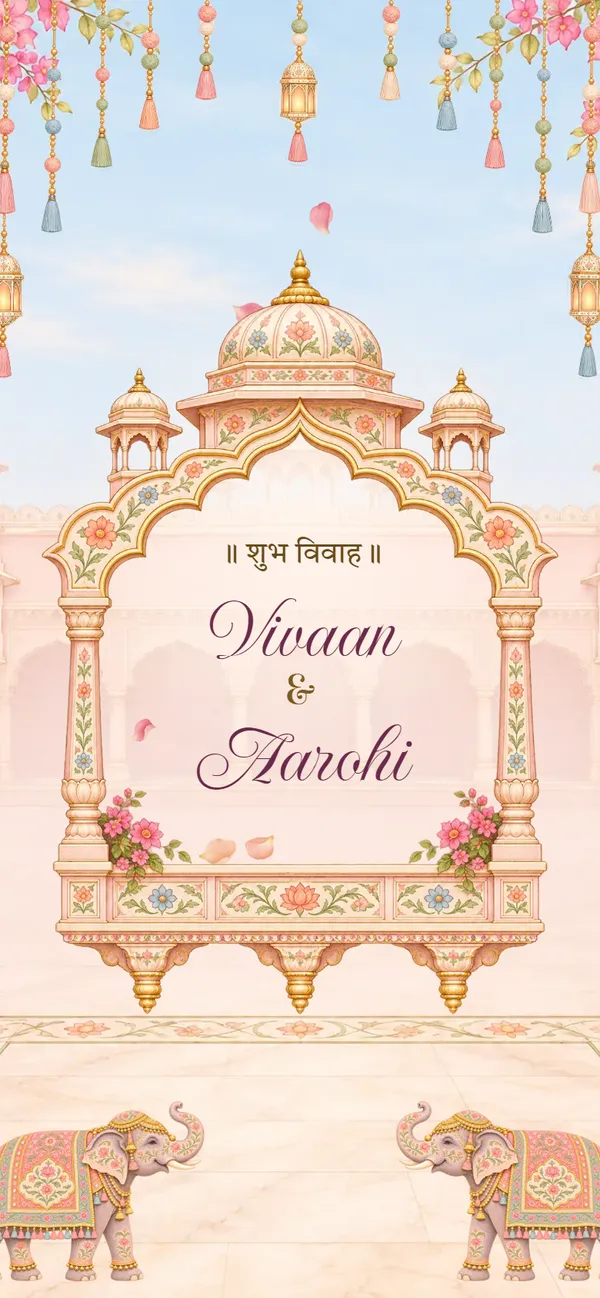
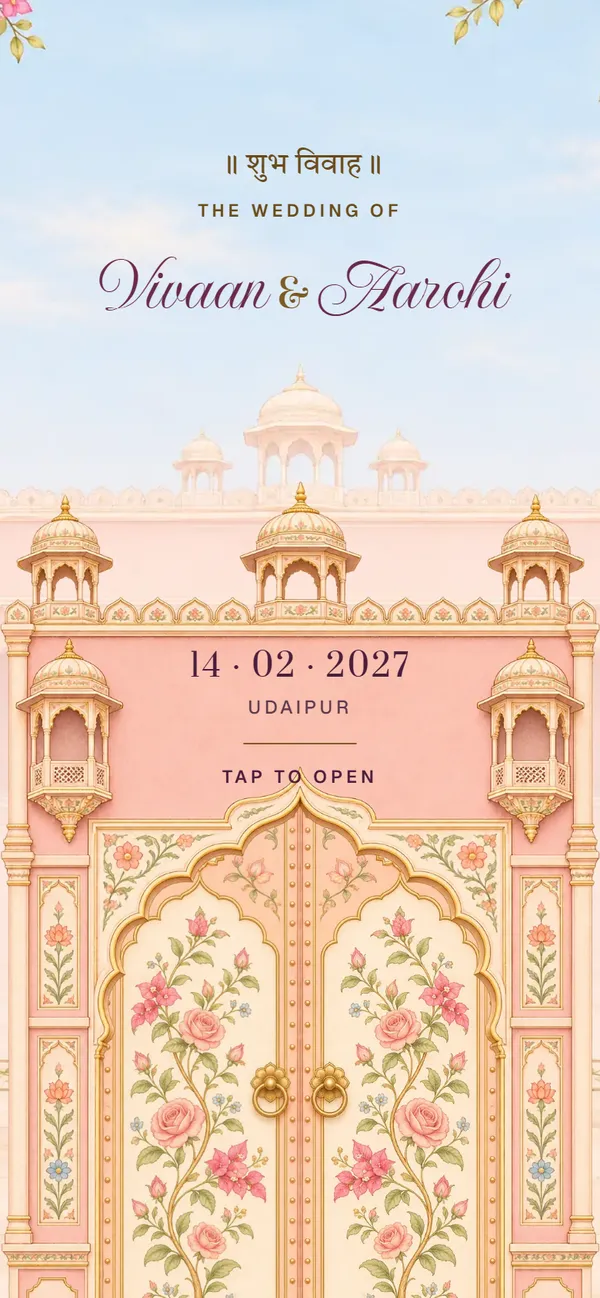
A pastel Rajasthani palace: rose-painted gates swing open, painted elephants step in and your names bloom in a jharokha.
Live preview with sample details
Scroll inside the phone to see every section
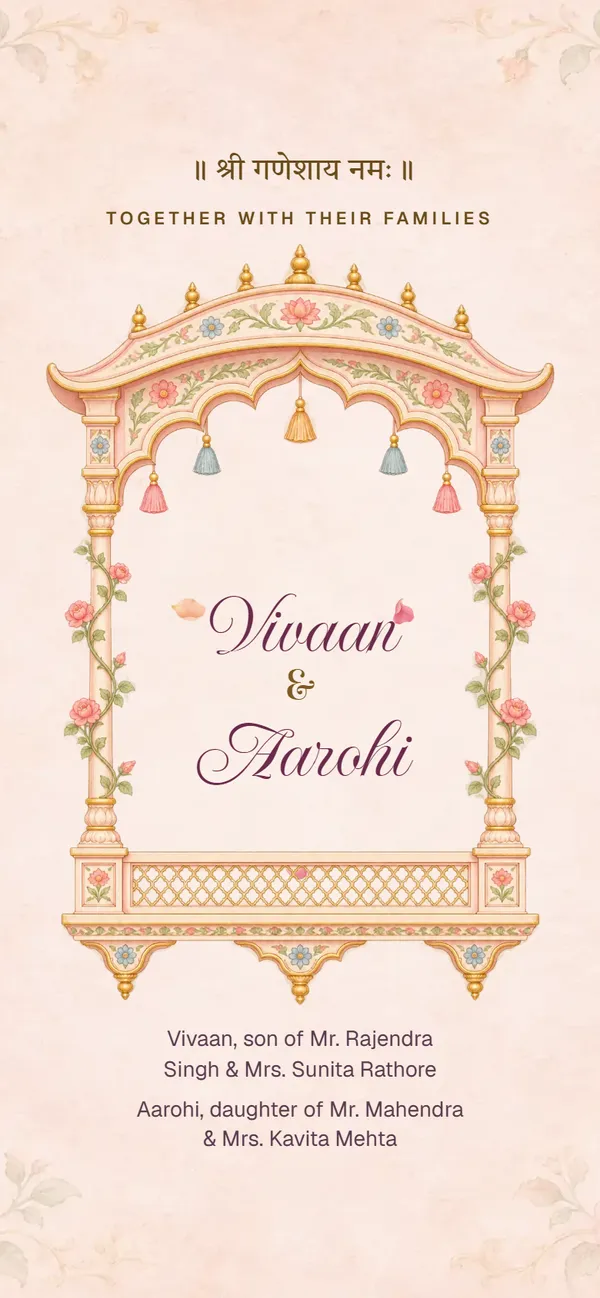
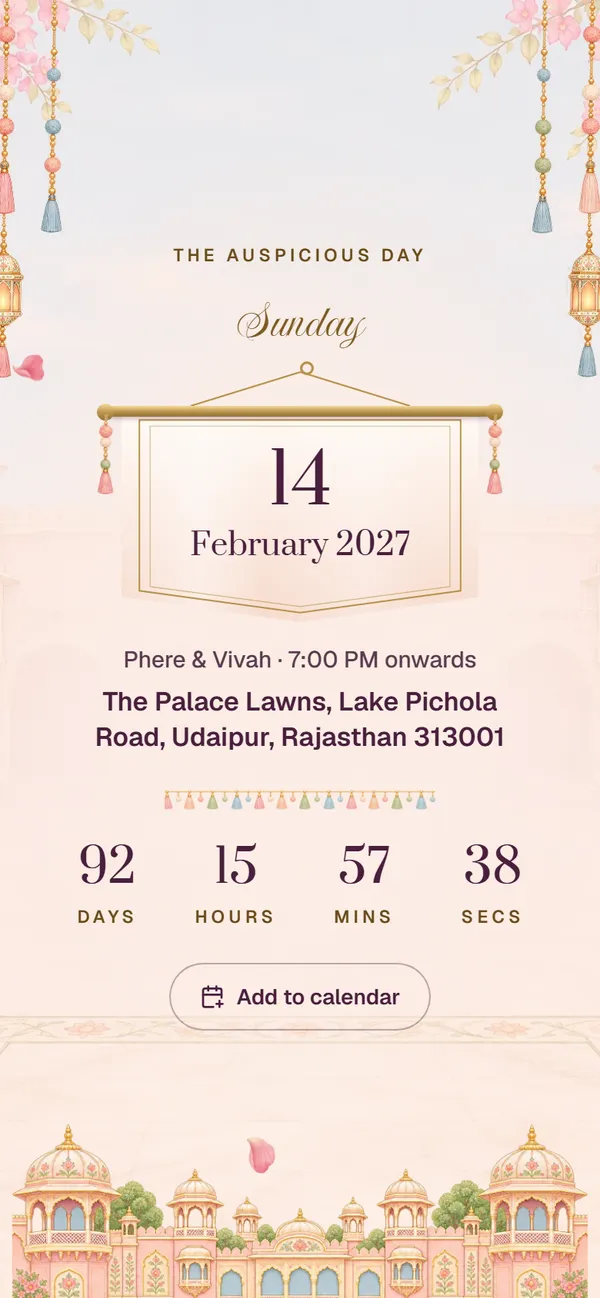
A Hindu wedding invitation painted like a Rajasthani miniature, in blush and peach plaster, ivory marble and antique gold. Guests tap the shut palace gates: they swing inwards, the view moves through the arch into a sunlit courtyard, two painted wedding elephants step in and raise their trunks, strings of pastel tassels and lanterns drop from the top and your names are written inside a cusped jharokha. Shree Ganeshaya Namah and both families' names follow in a slimmer jharokha, the wedding date unrolls on a silk banner, and Haldi, Mehendi, Sangeet, the pheras and the reception each get their own card with Get directions.
Screens from the live invitation with sample names, in the order guests scroll through them. Yours shows your own names, dates and venues.
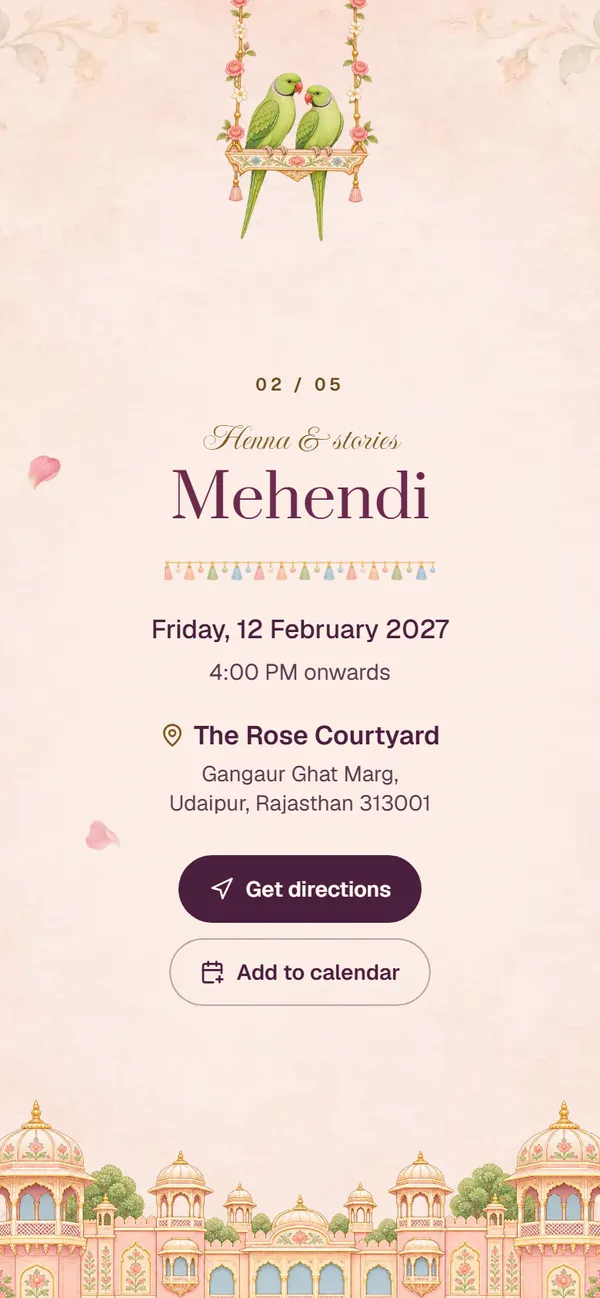
Everything your guests need sits on one page, and everything you fill in is already laid out for you.
Haldi, Mehendi, Sangeet, Wedding and Reception are set up for you. Give each one a date, time and venue, or switch off what you aren't hosting.
Your names sit under the blessing, followed by your welcome message: write it in English, Hindi or both.
Paste a Google Maps link or just the address. Functions held at home can be marked “at home”.
Add one or more phone numbers for the bride's and groom's sides. Guests tap to call.
Preview it exactly as guests will see it, then copy the link or send it straight to WhatsApp.
A wedding at a palace, a haveli or a heritage hotel usually runs over two or three days, and guests travel in from other cities. They want to know which courtyard or lawn each function is in, what to wear and how late the evening runs. Here's what to fill in for each function.
A morning function, often in the haveli's courtyard or at home. Switch on “at home” if it is, and say in the welcome message if guests should wear yellow.
An afternoon of henna and folk songs. Give a start time and the courtyard or terrace it's in, so guests coming from the hotel find it.
An evening of music and dancing. Give the time the programme starts, so cousins who are performing know when to be there.
Give the time for the baraat or the jaimala. In a palace or a fort, name the gate or the lawn guests should come to, and if the pheras' muhurat is late, say so in the welcome message.
Write the time dinner opens and add the venue's Maps link. Heritage hotels often have more than one entrance: name the one nearest the hall.
Copy a line into your welcome message and change the names in brackets.
With the blessings of our elders, the Rathore and Mehta families invite you to the wedding of [Groom's name] and [Bride's name] in the City of Lakes.
शुभ विवाह के इस मंगल अवसर पर आप सपरिवार सादर आमंत्रित हैं। आपकी उपस्थिति हमारे आनंद को दोगुना कर देगी।
You and your family are warmly invited to this auspicious wedding. Your presence will double our joy.
Padharo mhare des: aapke aane se hi shaadi ki raunak hai.
Welcome to our land: the wedding shines because you are there.
Every design has the same features. They differ in look, opening blessing and the functions they start with.
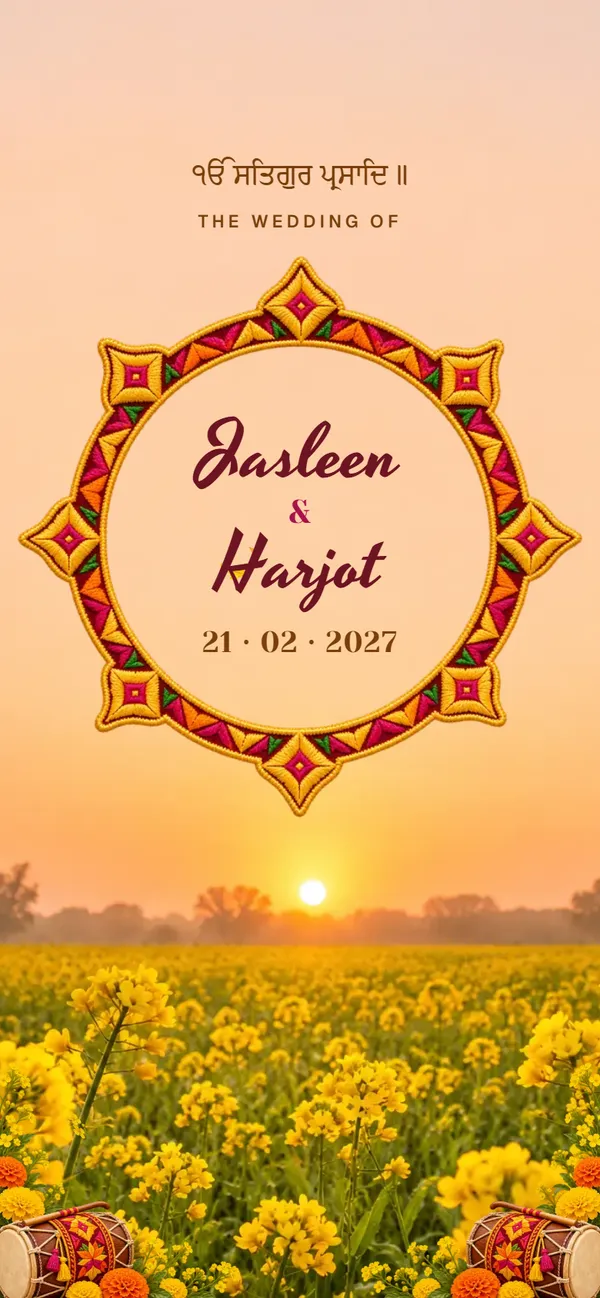
Phulkari
Sikh
Free to try · Regular price ₹499 Now ₹99Roka & Shagun · Mehndi & Sangeet · Jaggo · Chooda & Kalire · Anand Karaj · Reception

Noor Nikah
Muslim
Free to try · Regular price ₹499 Now ₹99Haldi · Mehndi · Nikah · Walima

Kankotri
Hindu
Free to try · Regular price ₹499 Now ₹99Ganesh Sthapana · Mameru · Mehndi · Garba · Hast Melap · Reception
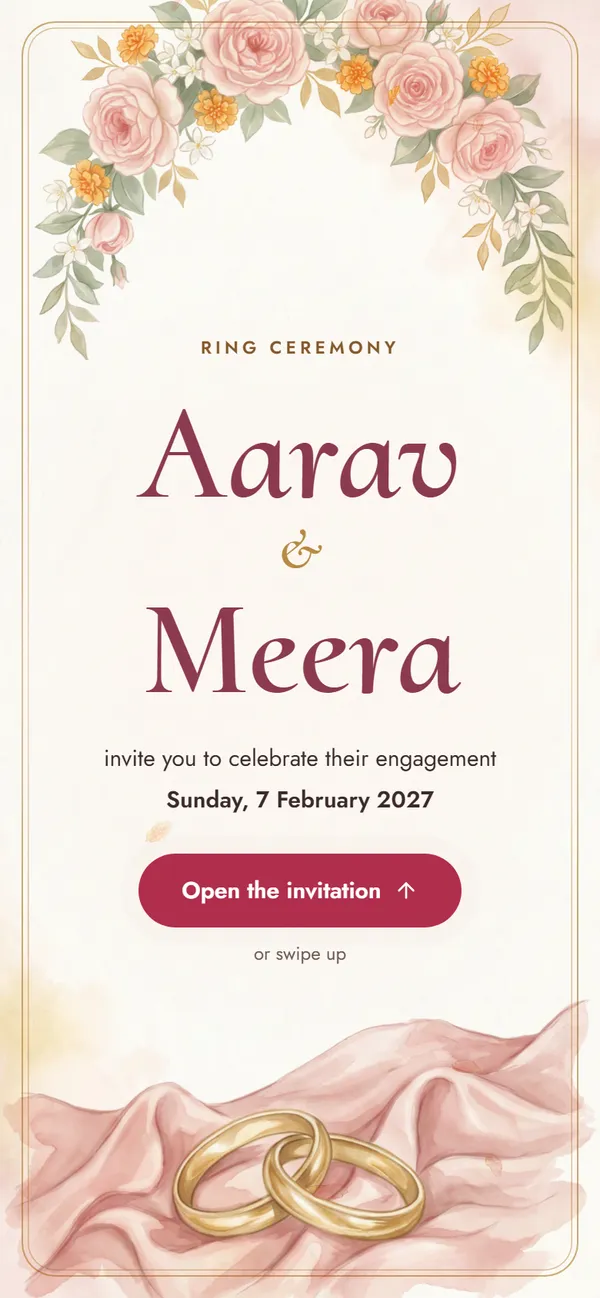
Ring Ceremony Blush
Engagement
Free to try · Regular price ₹299 Now ₹99Roka · Ring · Dinner
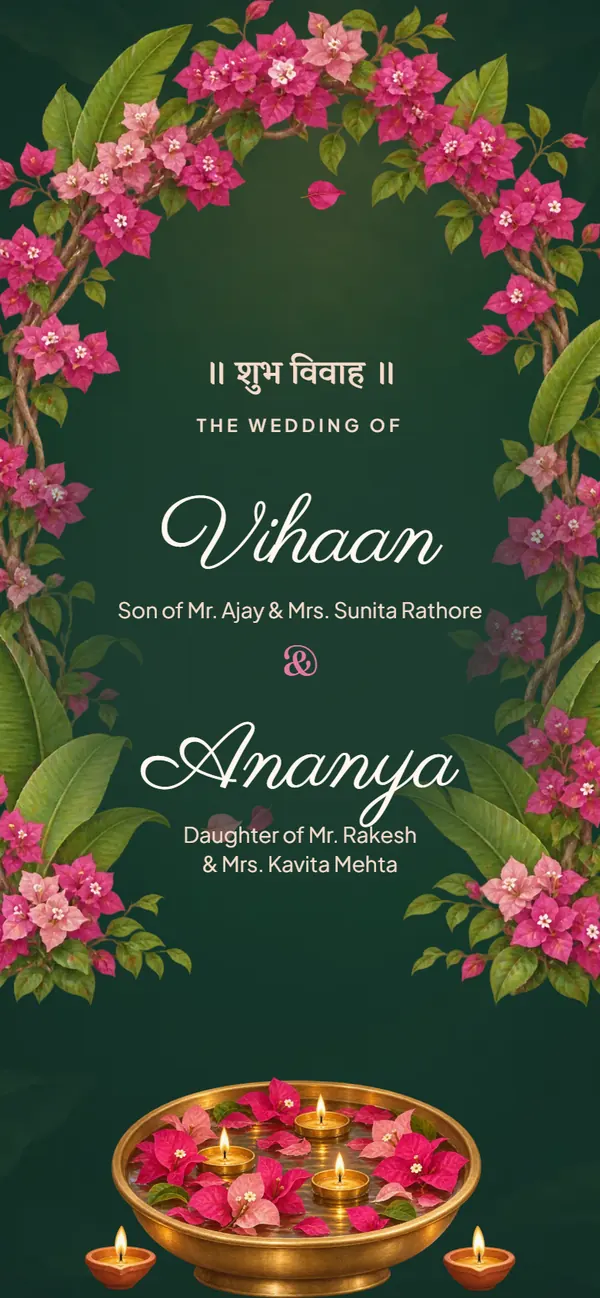
Gulabi Bagh
Hindu
Free to try · Regular price ₹499 Now ₹99Haldi · Mehendi · Sangeet · Wedding · Reception
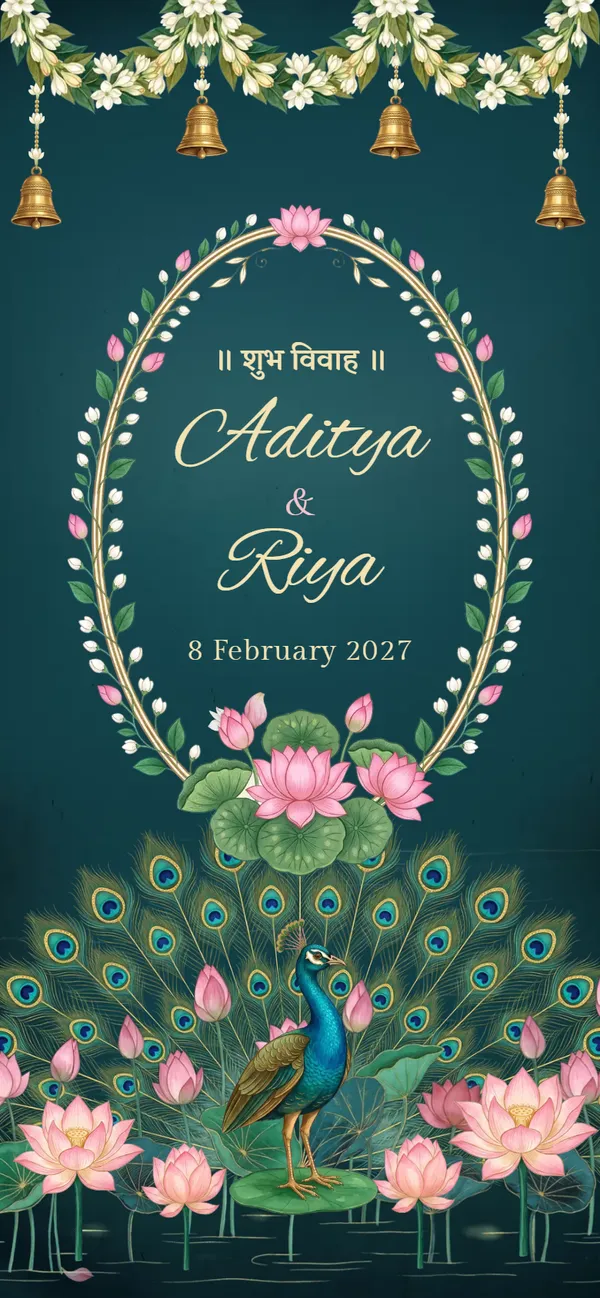
Mor Sarovar
Hindu
Free to try · Regular price ₹499 Now ₹99Haldi · Mehendi · Sangeet · Wedding · Reception

Shahi Mehfil
Hindu
Free to try · Regular price ₹499 Now ₹99Haldi · Mehendi · Sangeet · Wedding · Reception
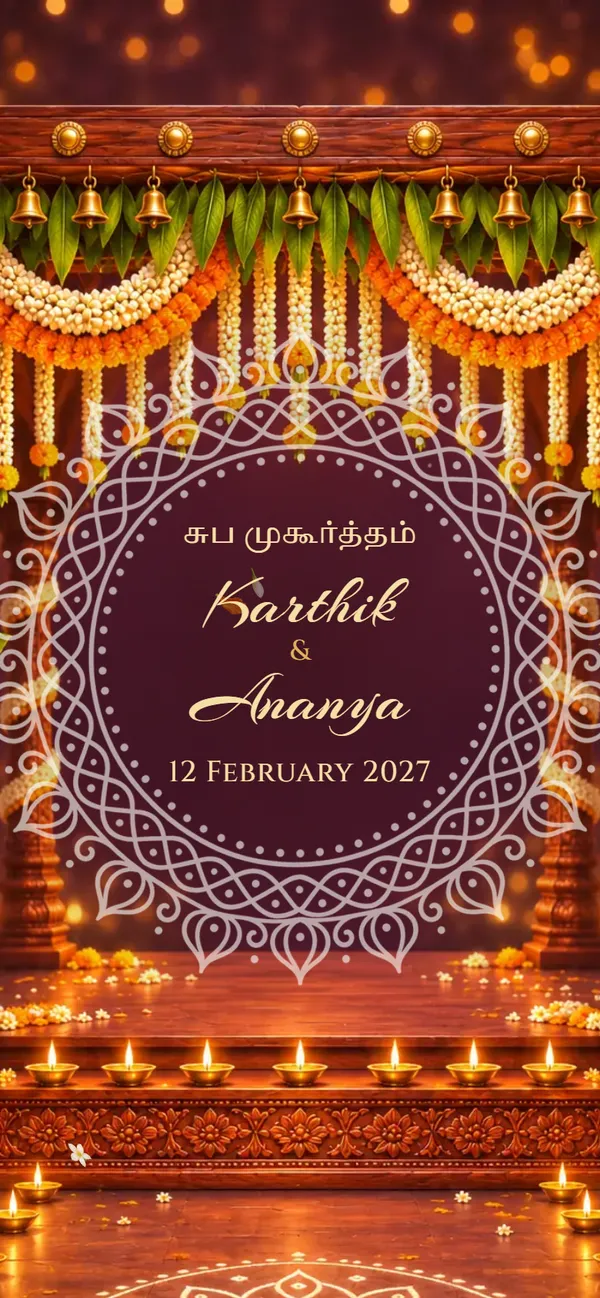
Mallige
Hindu
Free to try · Regular price ₹499 Now ₹99Nichayathartham · Mehendi · Sangeet · Muhurtham · Reception
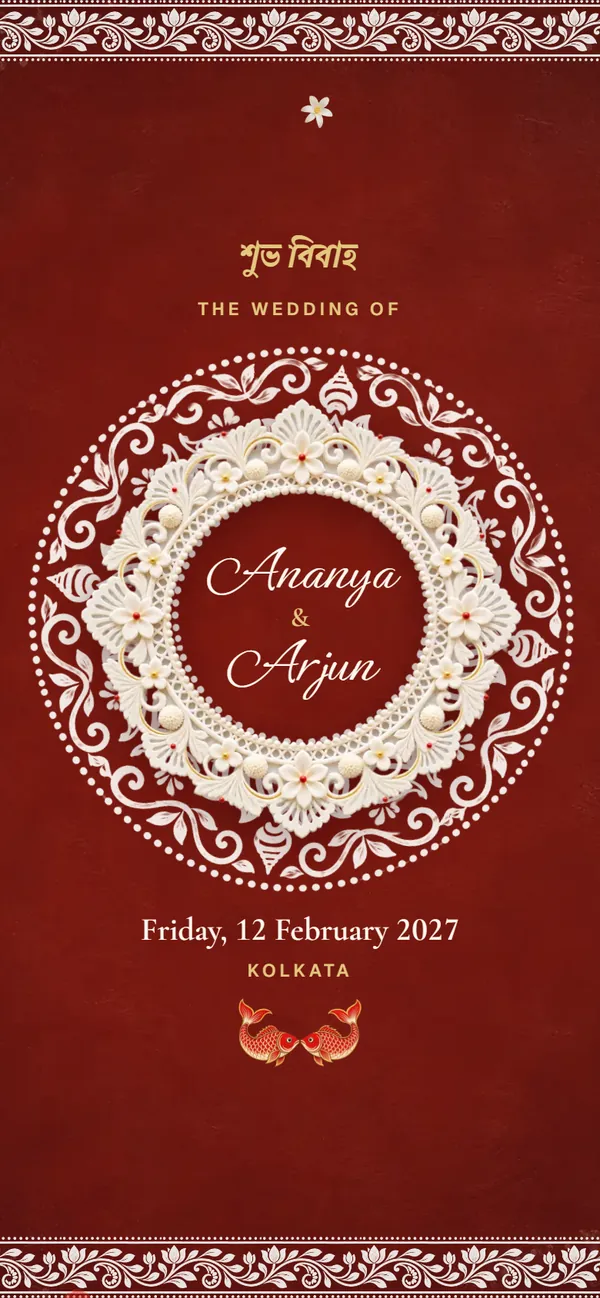
Alpona
Hindu
Free to try · Regular price ₹499 Now ₹99Aashirbad · Gaye Holud · Biye · Bou Bhaat

Buransh
Hindu
Free to try · Regular price ₹499 Now ₹99Haldi Haath · Mehendi · Baraat & Phere · Reception
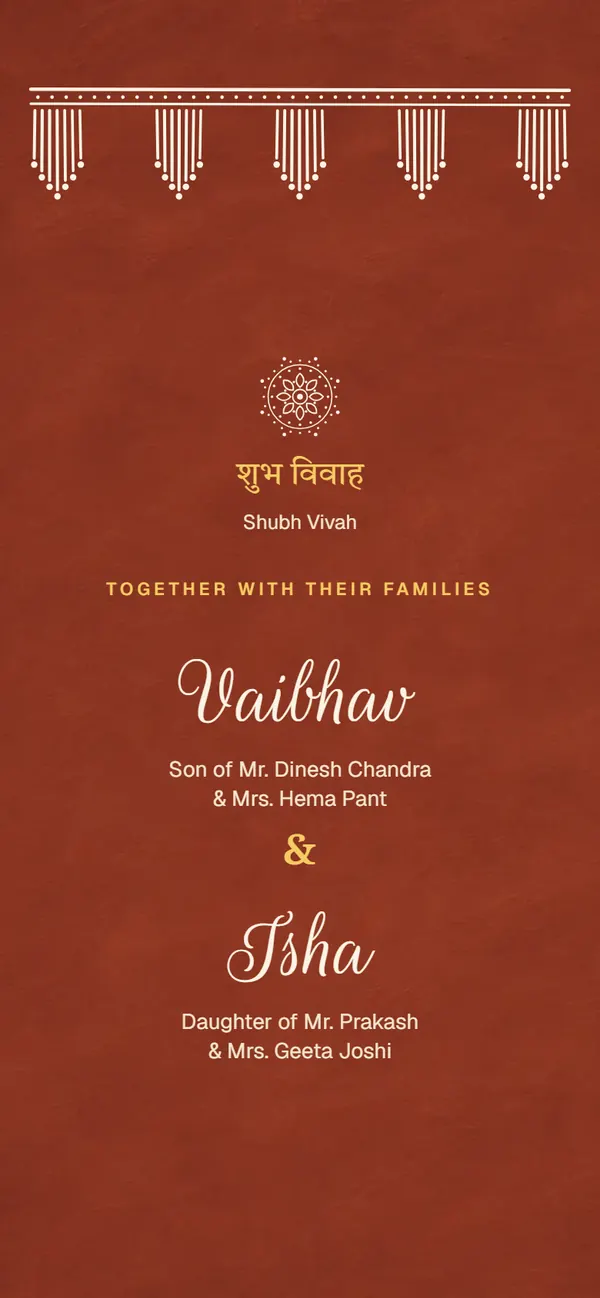
Aipan
Hindu
Free to try · Regular price ₹499 Now ₹99Suwal Pathai · Haldi · Dhooliarghya & Phere · Reception
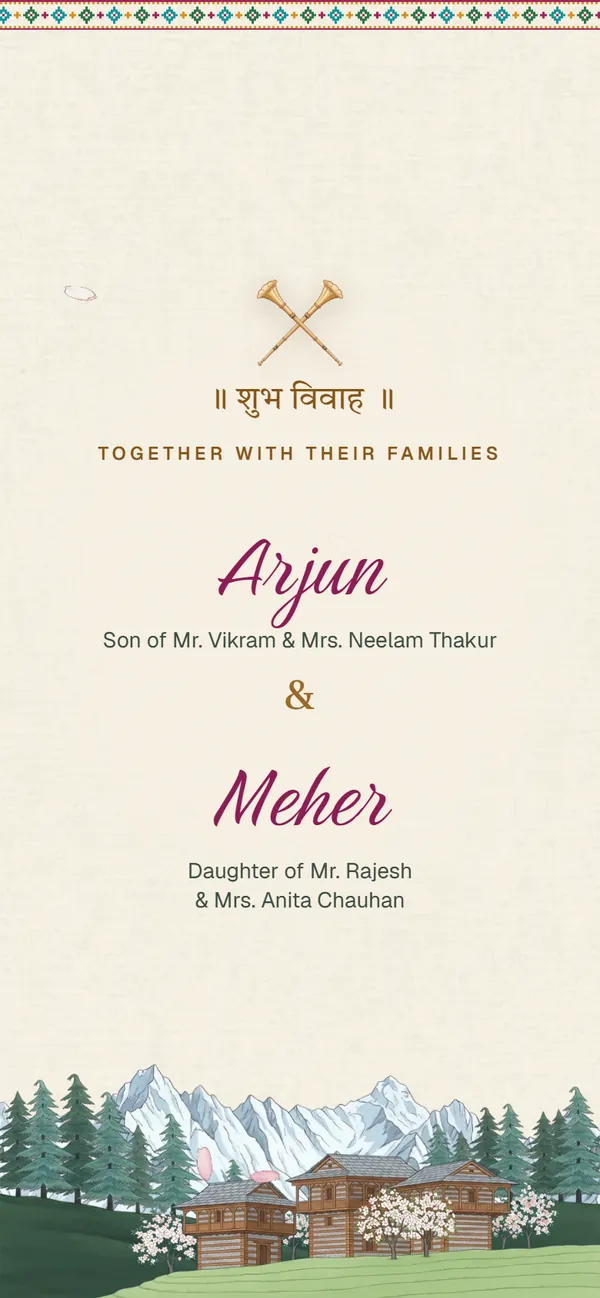
Kullu Pattu
Hindu
Free to try · Regular price ₹499 Now ₹99Haldi · Mehendi · Baraat & Phere · Dham
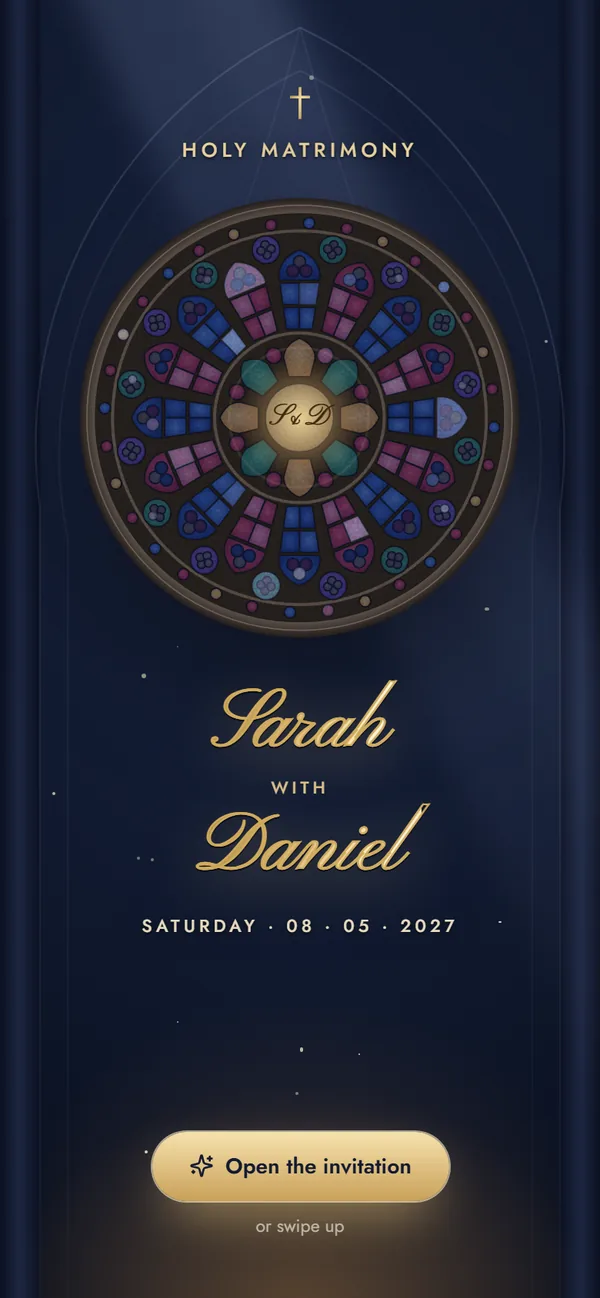
Christian Classic
Christian
Free to try · Regular price ₹499 Now ₹99Engagement · Bridal Shower · Roce · Holy Matrimony · Reception
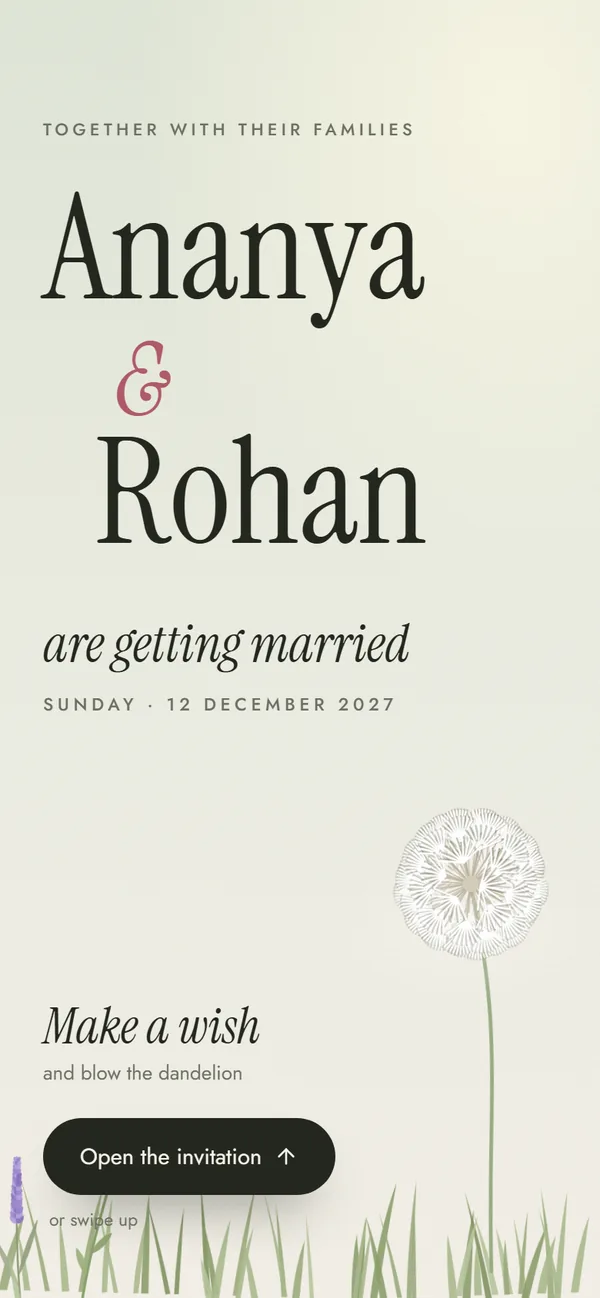
Modern Minimal
Any tradition
Free to try · Regular price ₹499 Now ₹99Welcome Drinks · Mehendi · Wedding · Reception · After-Party
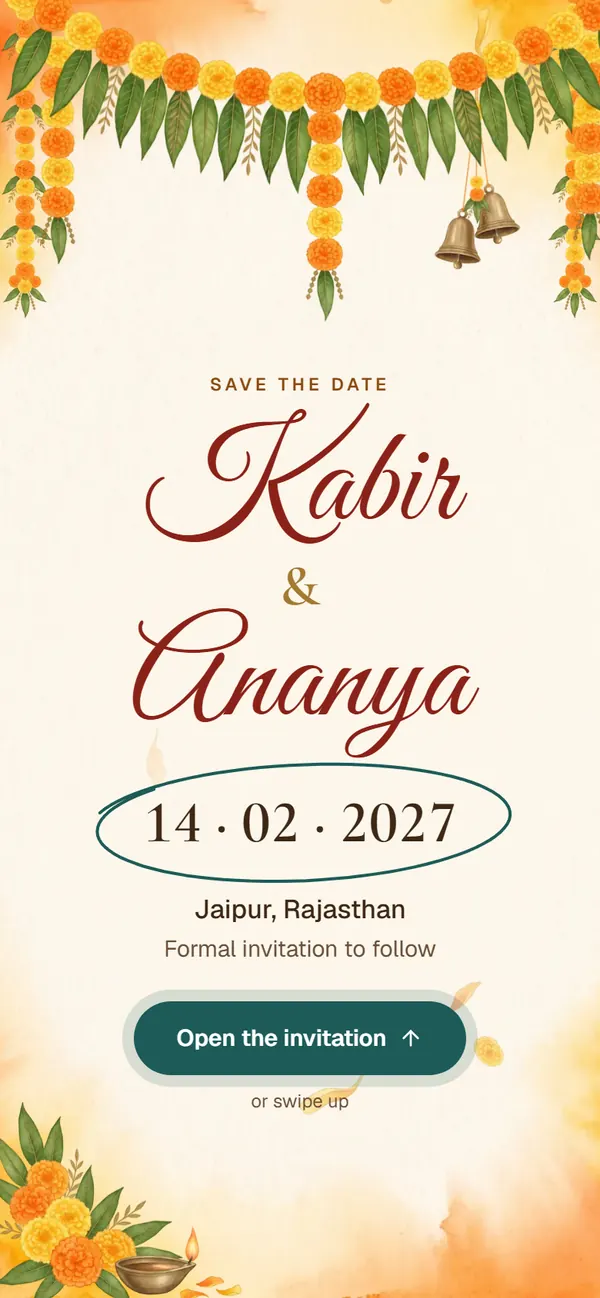
Marigold Save the Date
Save the date
Free to try · Regular price ₹299 Now ₹99Wedding
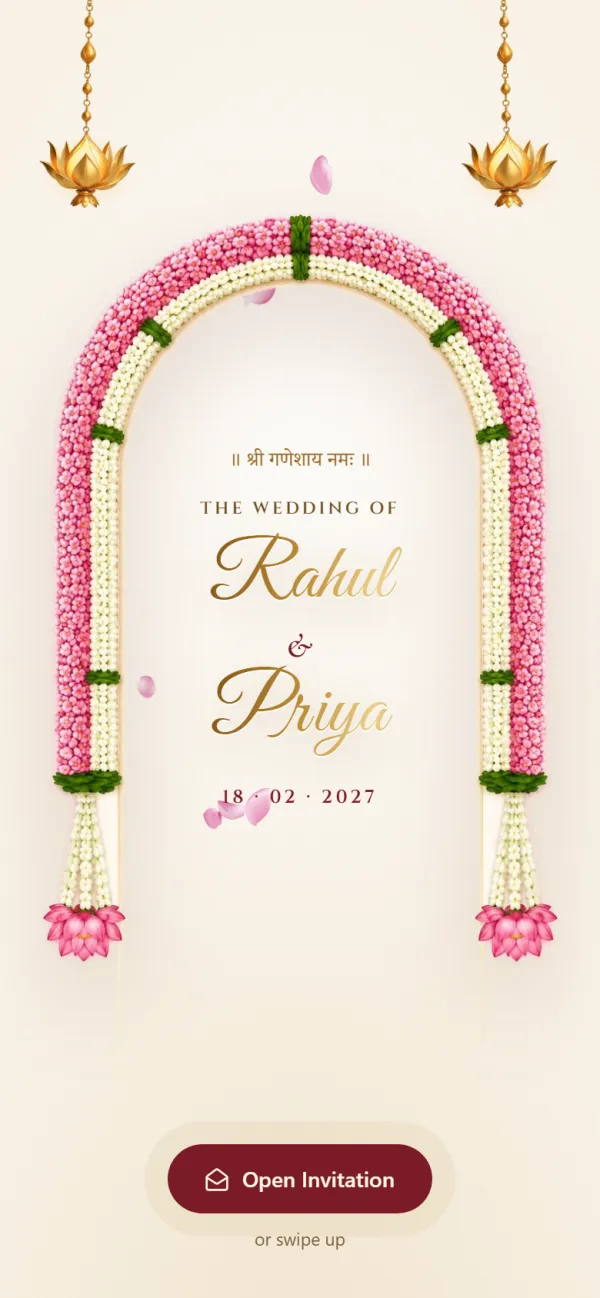
Hindu Traditional
Hindu
Free to try · Regular price ₹499 Now ₹99Haldi · Mehendi · Sangeet · Wedding · Reception
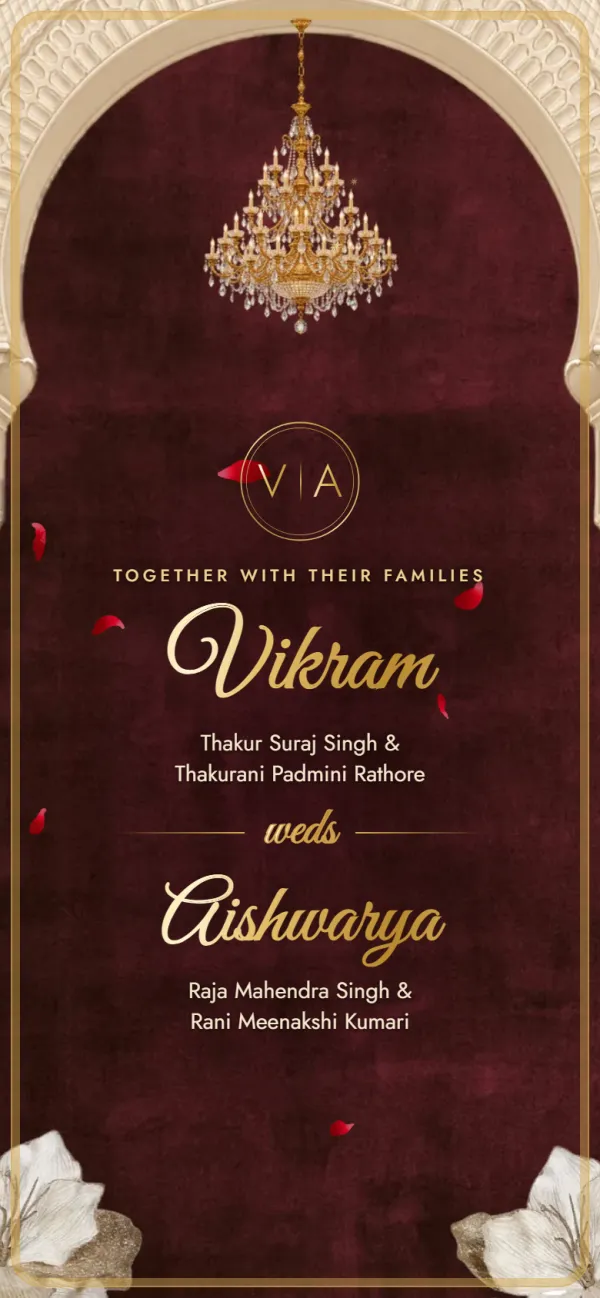
Hindu Royal
Hindu
Free to try · Regular price ₹499 Now ₹99Tilak · Haldi · Mehendi · Sangeet · Baraat · Royal Wedding · Grand Reception
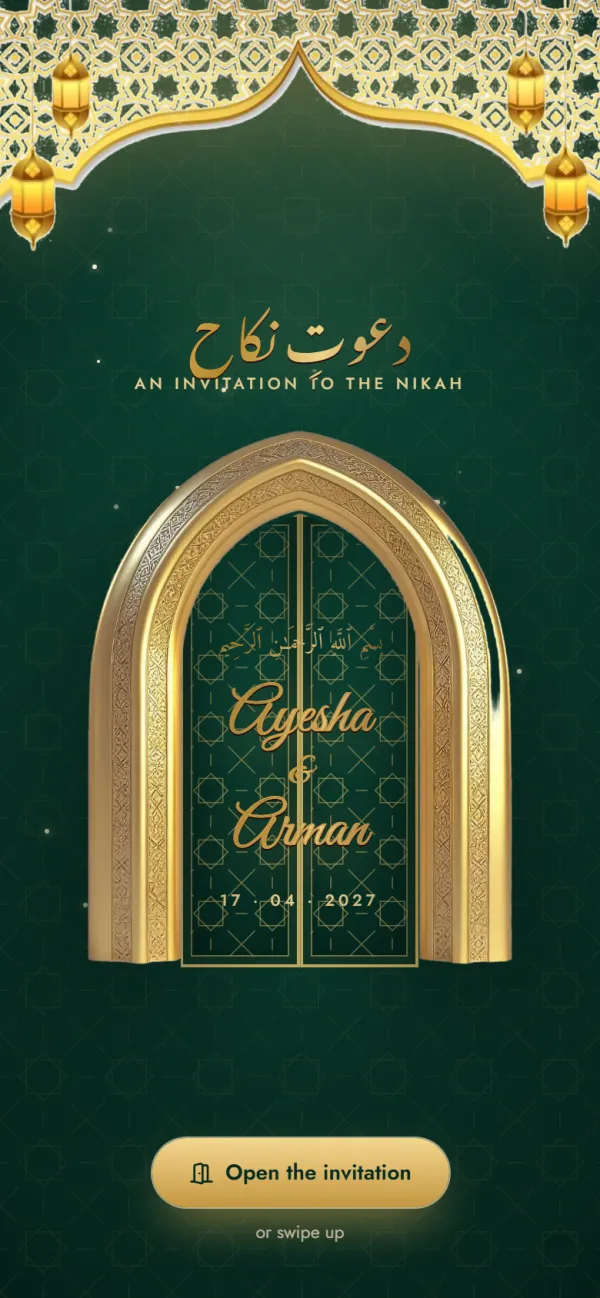
Muslim Elegant
Muslim
Free to try · Regular price ₹499 Now ₹99Mehndi · Nikah · Walima Reception
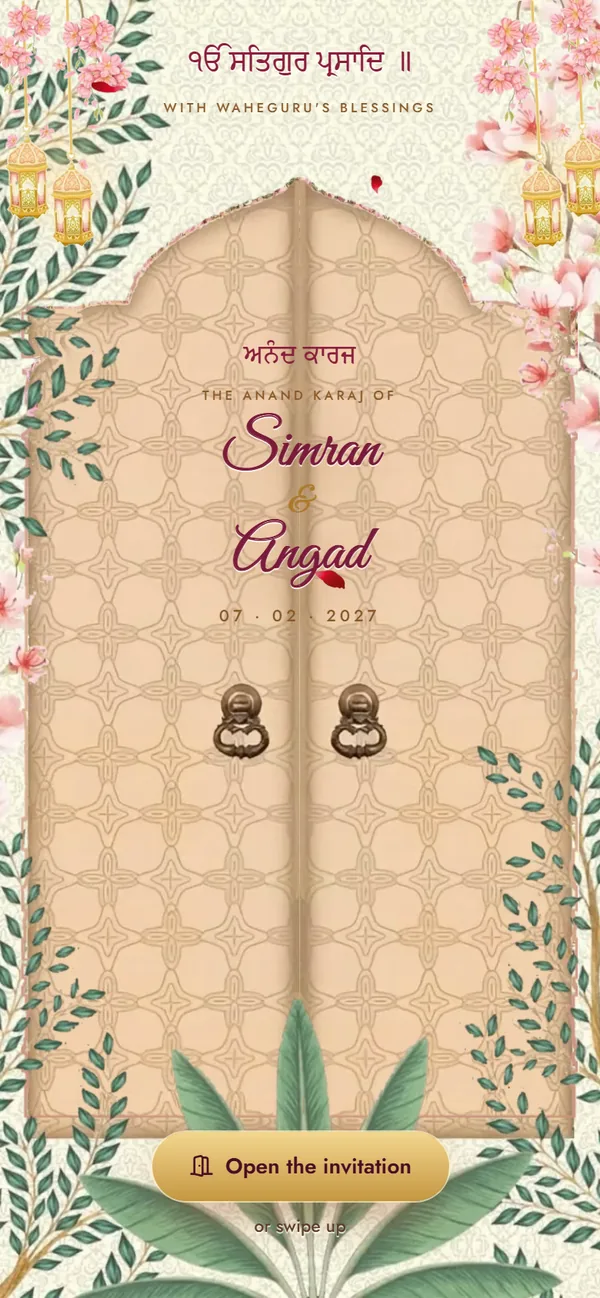
Sikh Vibrant
Sikh
Free to try · Regular price ₹499 Now ₹99Sehaj Path Bhog · Mehndi & Sangeet · Maiyan · Jaggo · Chooda & Kalire · Anand Karaj · Reception
What you can change, what's included and how guests open it.
It opens with ॥ शुभ विवाह ॥ above your names, followed by your welcome message (it begins with ॥ शुभ विवाह ॥, and you can edit it). 5 functions are already listed: Haldi, Mehendi, Sangeet, Wedding and Reception, each with a date, time, venue, address, an optional Google Maps link and an “at home” switch. Below them come the bride's and groom's families with one-tap call buttons, an optional “our story” section and your closing message.
Guests first see a pink palace gateway with its rose-painted gates shut, your names in the sky above it and the date and town on the gateway. One tap starts the music: the gates swing inwards, the view moves through the arch into a sunlit courtyard, two painted elephants walk in and raise their trunks, strings of tassels and lanterns drop from the top and your names are written inside a jharokha. It takes about four seconds and plays the same in WhatsApp's browser. Further down, the wedding date unrolls on a silk banner, and Haldi, Mehendi, Sangeet, Wedding and Reception each get their own card with Get directions. On phones set to reduce motion, the invitation opens straight away.
Tap “Use this design”. Enter both names and family names, then fill in each function's date, time and venue: the date and time you type in the first function fill in the others. Add phone numbers for each side and preview the invitation free. When it looks right, get your link (a one-time ₹99) and share it on WhatsApp. No sign-up is needed.
No. The design's colours and fonts are fixed. You can change all of the wording (names, families, functions, venues, phone numbers and messages), and you can switch to another template while you're editing if you'd like a different look.
You can switch off any of the 5 listed functions and it won't appear on the invitation. Adding new functions isn't available yet, so if your wedding needs one this design doesn't list, try another template.
Yes. It's a web link that opens in the phone's browser, so guests don't install anything. Directions buttons open Google Maps, and call buttons open the phone's dialler.
Add your names, functions, venues and family numbers and preview it free. Get your link for ₹99 when you love it.
Rang Mahal
Free to try · ₹99 to share till 16 Dec