Shubho Bibaho (Bengali)
শুভ বিবাহ
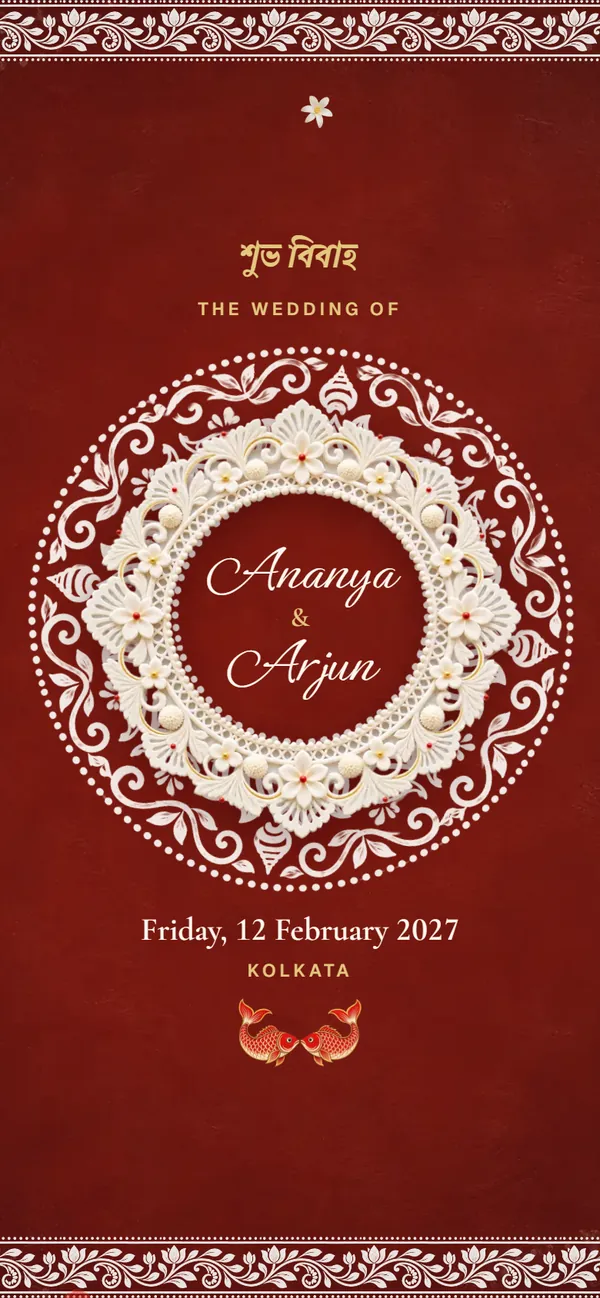
“An auspicious wedding”: the greeting on Bengali wedding cards. Alpona prints it on the cover and over your names.
Biyer card · Bengali Hindu wedding
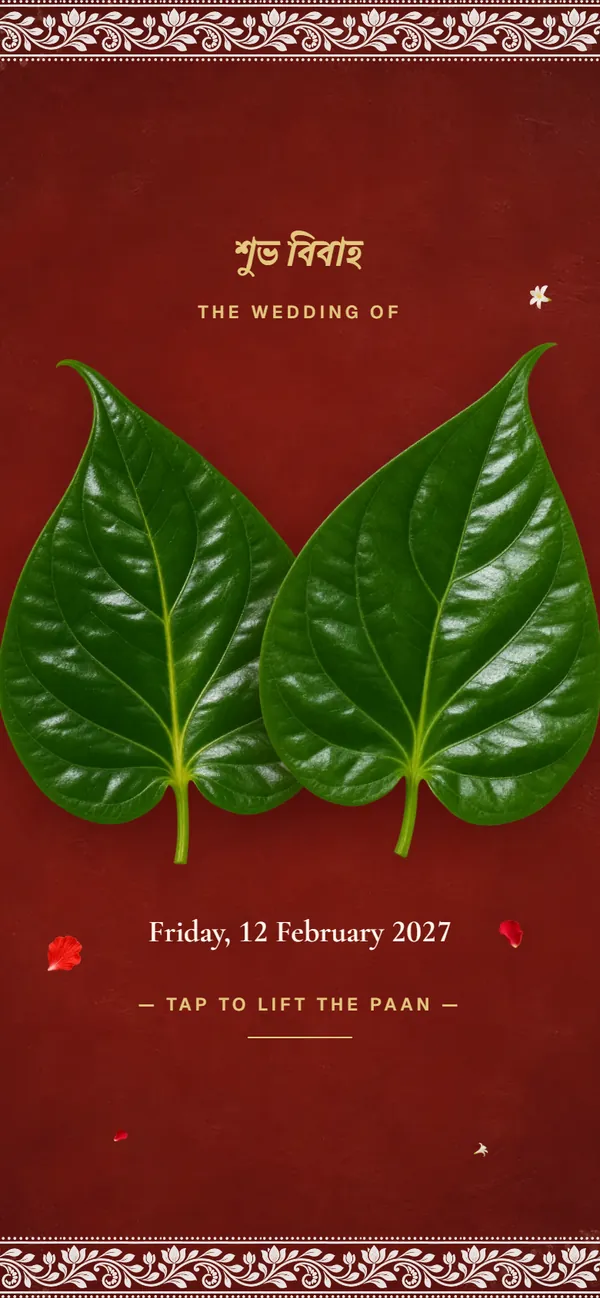
Alpona opens as two betel leaves part, as at shubho drishti, and a white alpona paints itself round your names.
The real design, running with a sample Kolkata wedding. Scroll inside the phone; yours shows your own names, dates and venues.
Guests tap to lift two betel leaves, the way a bride lowers them at shubho drishti. A white alpona paints itself and your names bloom in a shola-pith medallion.
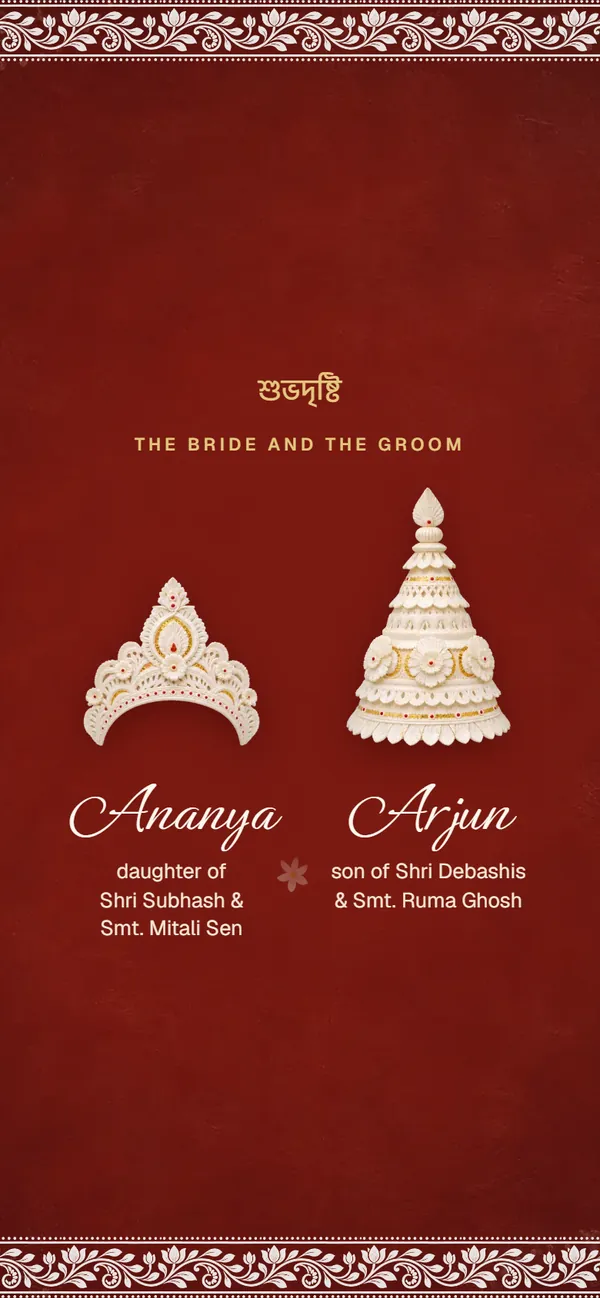
Shubho Bibaho heads the cover in Bengali script, and Shubho Drishti tops the couple's page under the mukut and the topor.
Scroll inside the phone
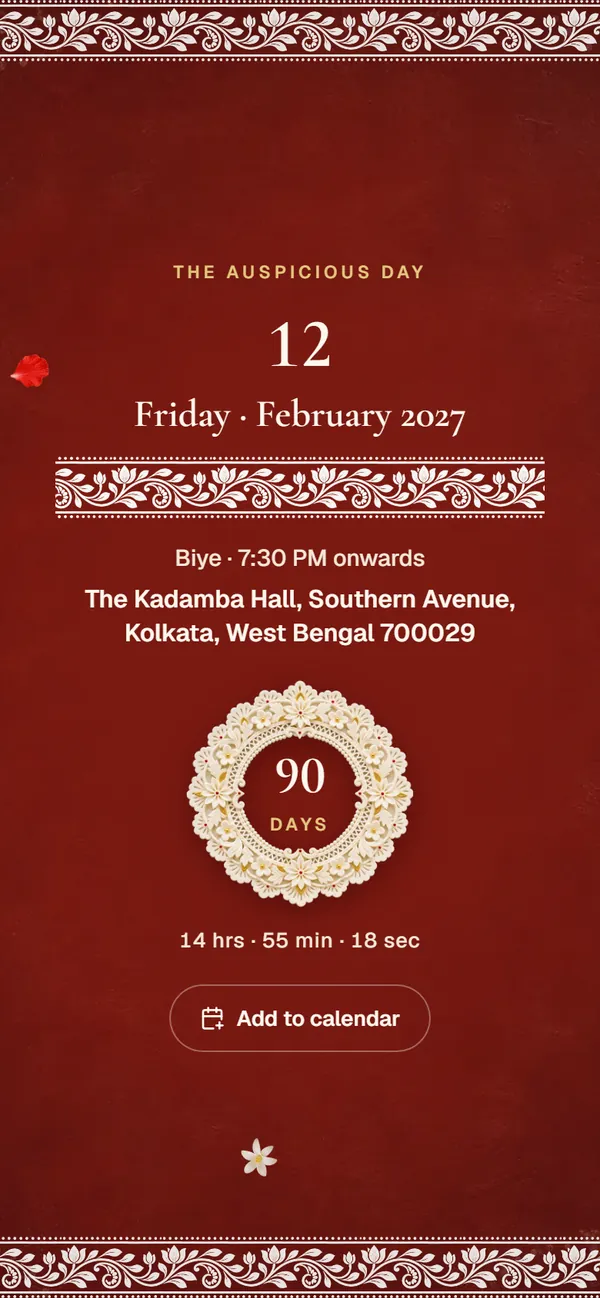
Each function has its own date, time and venue, with a Get directions button that opens Google Maps.
Guests tap to call or WhatsApp the bride's or the groom's family. There's no RSVP form: they reach you directly.
What guests see as they scroll, from the betel leaves to each function's card. Sample names here; yours shows your own.
Alpona starts with the four functions most Bengali families hold. Switch off the ones you aren't hosting. The names stay as they are, so write the timing of any other function in your welcome message.
The elders bless the bride and the groom with paddy and durba grass, usually a day or two before the wedding.
Turmeric paste for the bride and the groom at their homes, on the morning of the wedding or the day before.
Switch on “at home” and add your house address.
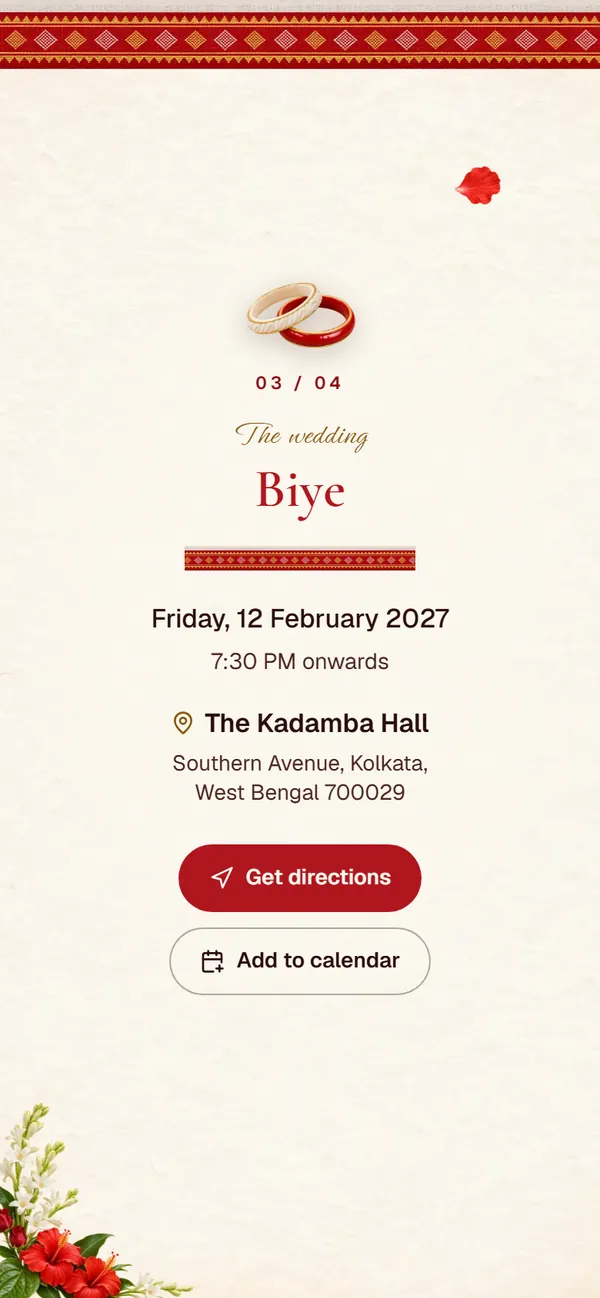
The wedding, usually in the evening at the lagna your purohit sets: shubho drishti as the bride lowers the betel leaves, the garland exchange and sindoor daan.
Put the lagna time on this card, so elders know when to be there.
The reception at the groom's home a day or two after the Biye, when the new bride serves rice to the family and guests stay for the feast.
The two Bengali lines the design prints, and the welcome message it starts with. Keep it or write your own.
শুভ বিবাহ
“An auspicious wedding”: the greeting on Bengali wedding cards. Alpona prints it on the cover and over your names.
শুভদৃষ্টি
“The auspicious first look” of the bride and the groom. Alpona prints it over the couple's page.
With the blessings of our elders, we joyfully invite you and your family to the wedding of our children. Come for the shubho drishti, stay for the feast, and bless the couple.
Alpona's own starting message. Prefer Bengali? Type your lines in Bengali script; the invitation shows exactly what you type.
Fuller Bengali wording for the card is coming to our wedding card matter library.
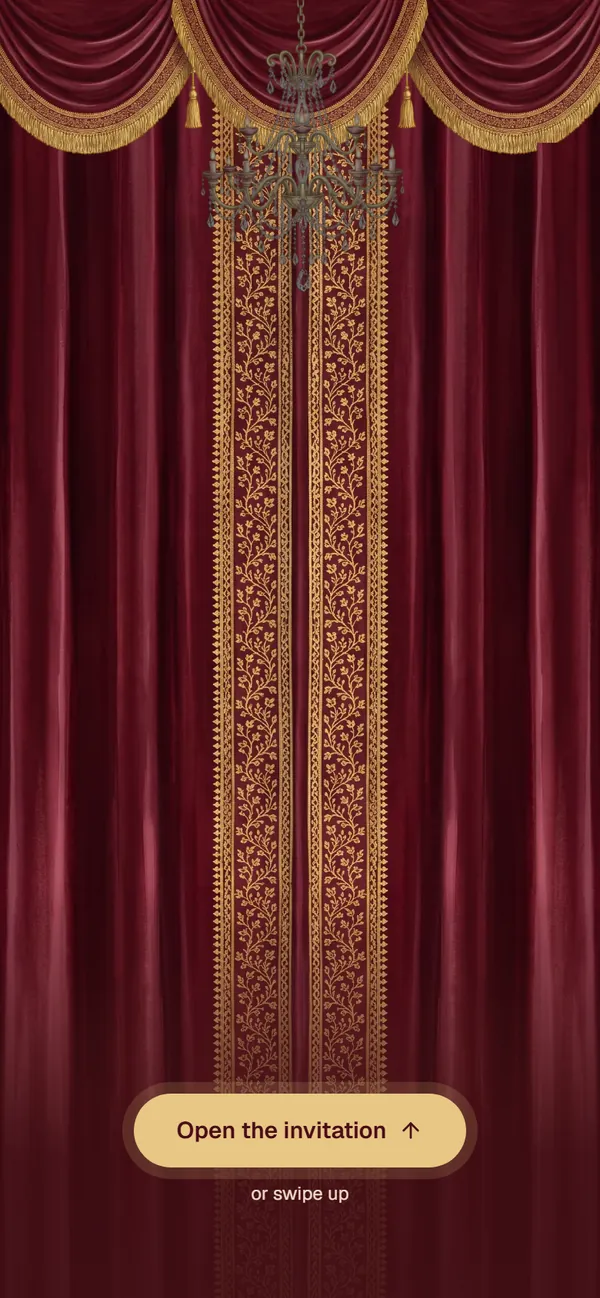
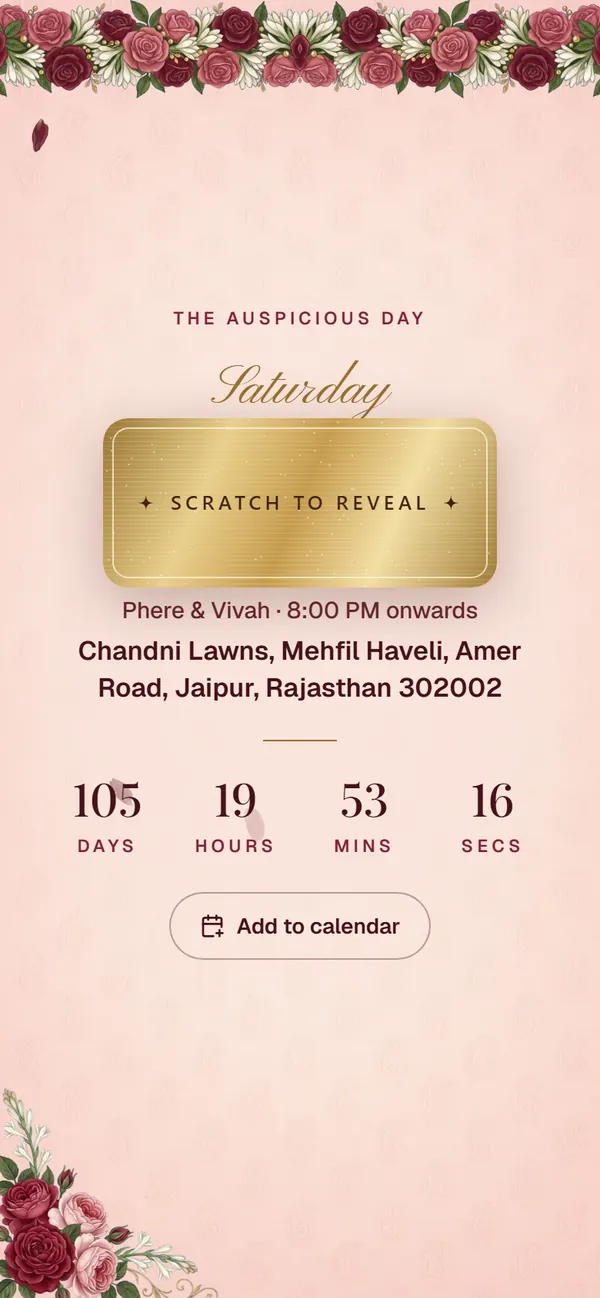
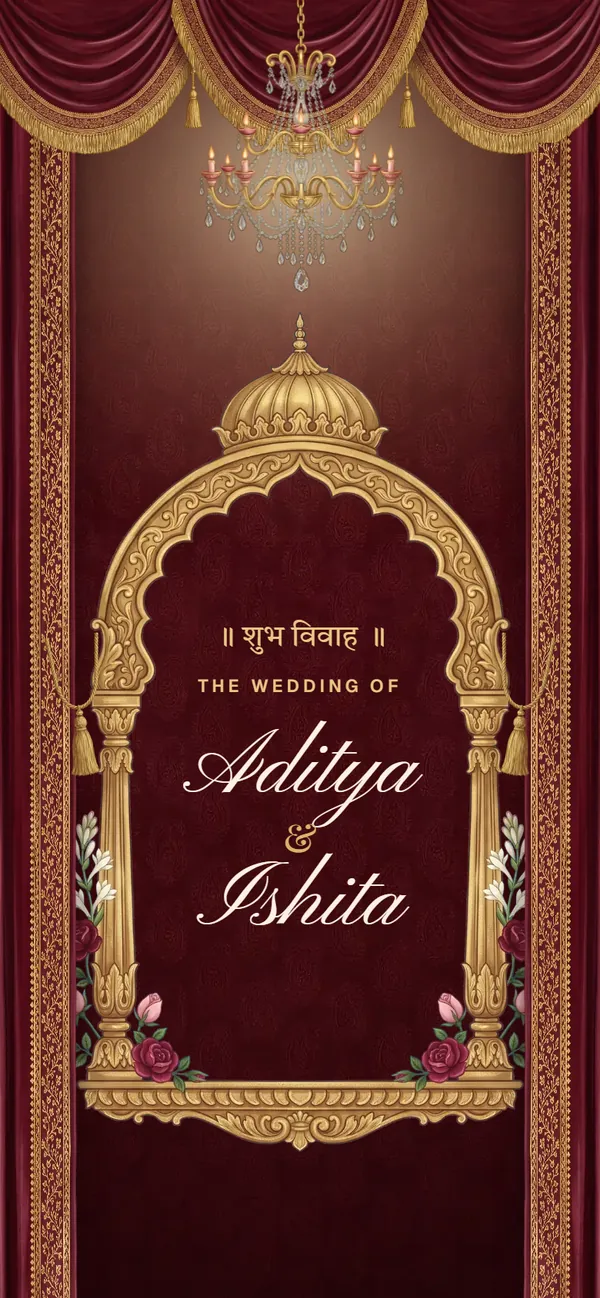
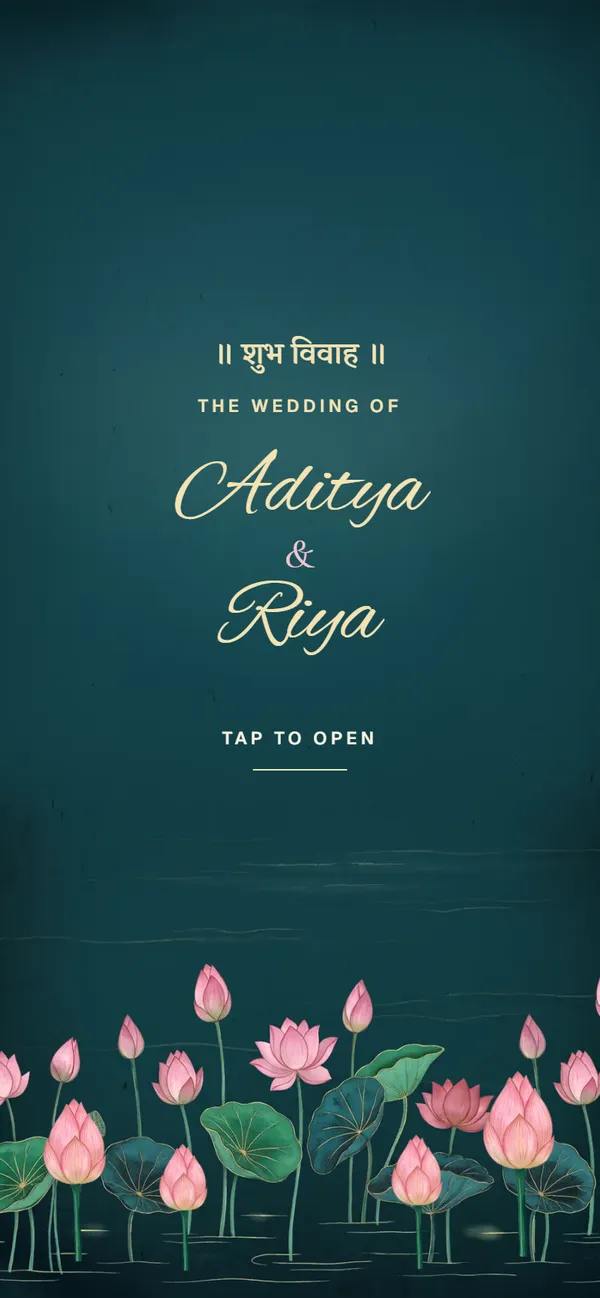
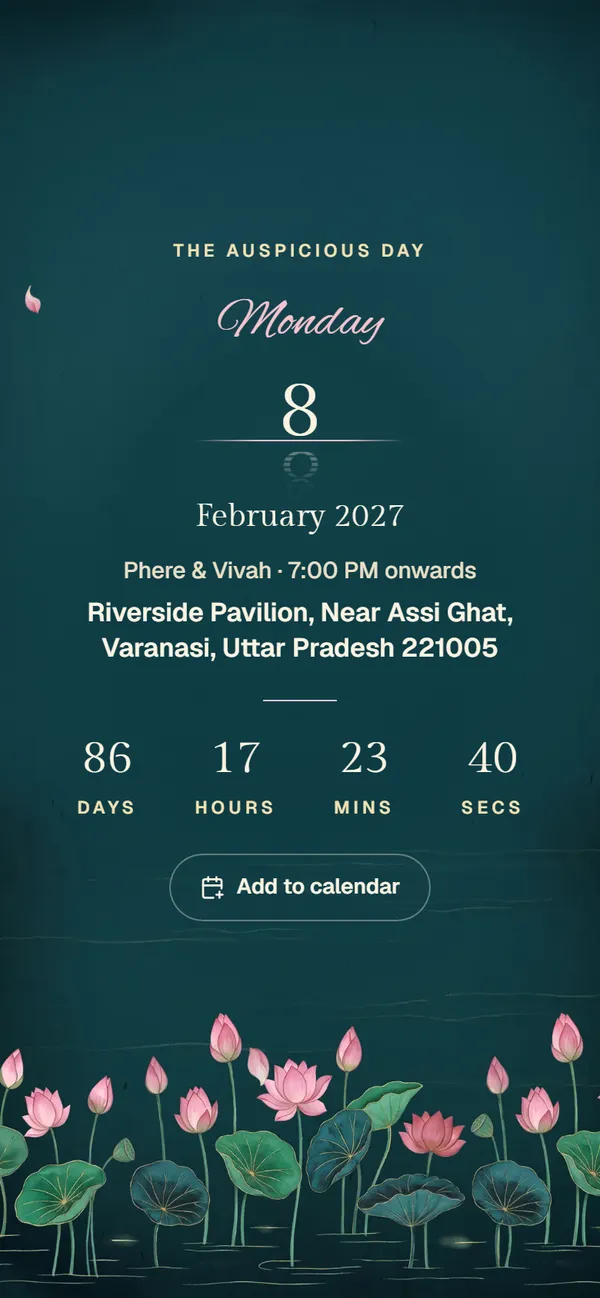
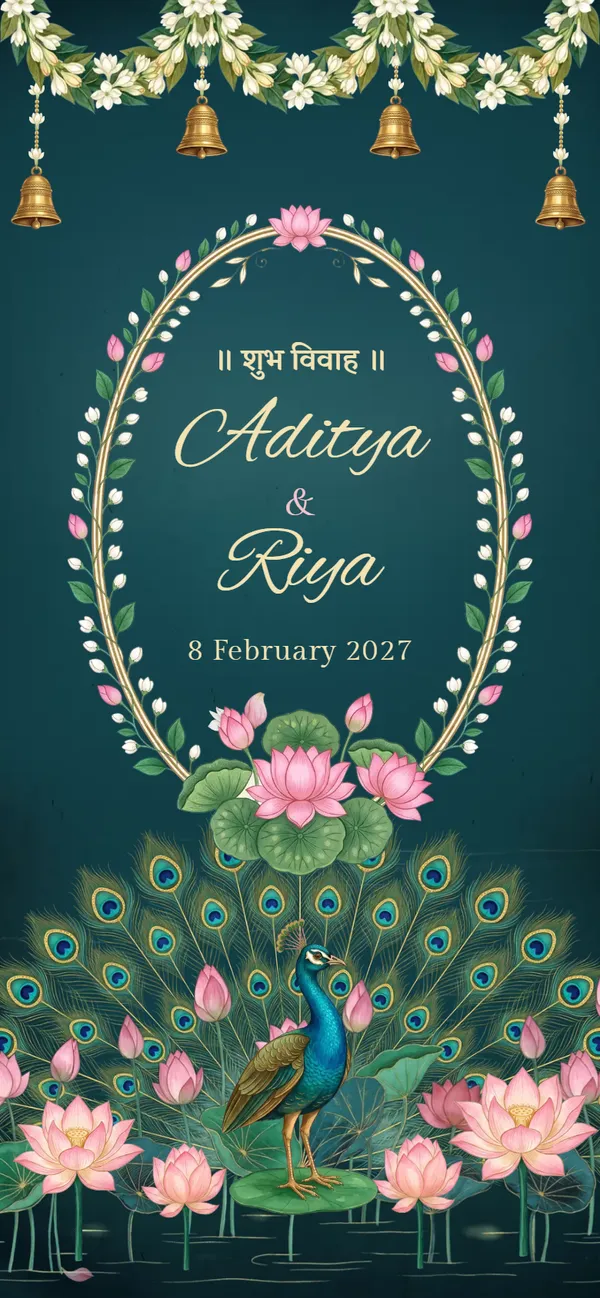
Every design has the same features; the look, the greeting at the top and the starting functions differ. Shahi Mehfil parts velvet curtains under a chandelier, for an evening Biye in a banquet hall. Mor Sarovar is a lotus pond at dusk. Both open with Shubh Vivah in Devanagari and start with Haldi to Reception. Modern Minimal starts in English, so your own Bengali lines can lead the welcome message.
5 functions ready · free to design
Velvet curtains part under a lit chandelier on your names in a gold jharokha, with a wedding date guests scratch to reveal.
Functions: Haldi · Mehendi · Sangeet · Wedding · Reception
5 functions ready · free to design
A lotus pond at dusk: the buds bloom, brass bells swing and a peacock fans its train behind your names, with the date rising from the water.
Functions: Haldi · Mehendi · Sangeet · Wedding · Reception


5 functions ready · free to design
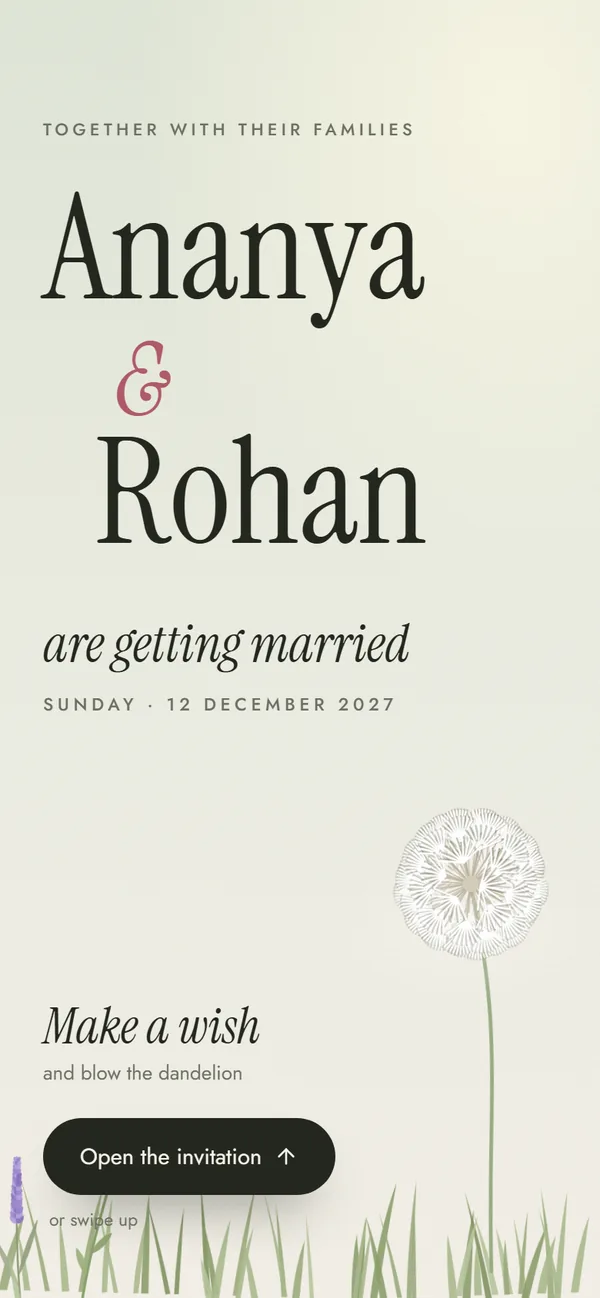
Make a wish on a dandelion, then watch a garden grow: editorial type, no religious text, an hour of the day for every function.
Functions: Welcome Drinks · Mehendi · Wedding · Reception · After-Party
No account and no design work. Most families finish in one sitting.
Add the bride's and the groom's names, both families and a phone number for each side. Designing is free, with no sign-up.
Ananya & Arjun
The Aashirbad to the Bou Bhaat are listed. Add each date, time, venue and Google Maps link, and switch off what you aren't hosting.
Biye · 7:30 PM
See it exactly as guests will, free. Send the preview to your parents before you pay.
Send preview to family
Your link is ₹99, once. Share it on WhatsApp and edit it until the wedding. If you like, add an invitation video at checkout; it's optional and paid separately.
Share on WhatsApp →
The biyer card design, the functions, Bengali text and the price.
Yes. Alpona is a Bengali wedding card in red oxide, rice-paste white and shola ivory. Two betel leaves part as at shubho drishti, a white alpona paints itself, and your names bloom in a shola-pith medallion, with Shubho Bibaho in Bengali on the cover. You send it as one link on WhatsApp, and it opens on any phone without an app.
Designing and previewing is free, with no sign-up. When you're happy with it, your shareable link is a one-time ₹99 (Shaadi season launch offer till 16 Dec, usually ₹499), the same for every wedding design. It includes unlimited guests and edits until the wedding. If you like, add an invitation video at checkout; it's optional and paid separately.
Aashirbad, Gaye Holud, Biye and Bou Bhaat, each with its own date, time, venue and Get directions button. Switch off the ones you aren't holding. The list is fixed, so write the timing of any other function, such as an Aiburobhat, in your welcome message.
Yes, in your own words. The welcome message, the closing message and your story show exactly what you type, in Bengali script, English or both. Shubho Bibaho and Shubho Drishti are already in Bengali; the function names stay in English letters.
No. The design prints Shubho Bibaho and Shubho Drishti only. If your family wants the Prajapati line, type it at the start of your welcome message, the way it is written on your family's cards.
No. There's no RSVP form or guest list. Guests tap Call or WhatsApp to reach the bride's or the groom's family directly.
Betel leaves, a white alpona and every function from the Aashirbad to the Bou Bhaat, on one link for WhatsApp.
Free to try
₹99 only when you share


