Traditions & Designs8 min read
Indian Wedding Invitation Customs & Traditions (Hindu, Muslim, Sikh, Christian)
The blessings, colours, wording conventions and functions that shape Indian wedding invitations across Hindu, Muslim, Sikh and Christian families — and how they carry over to digital invites.
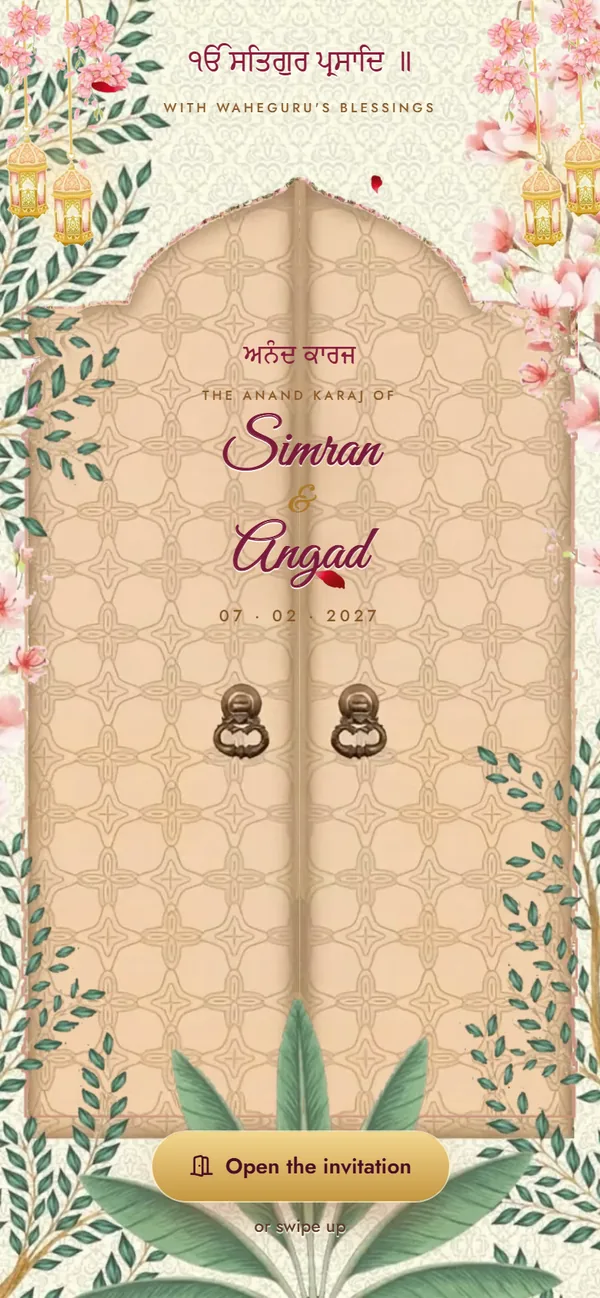
Indian wedding invitations are not just cards — they're auspicious announcements shaped by centuries of tradition, cultural symbolism and religious meaning. From Ganesh ji's blessing on a Hindu card to Bismillah on a Nikah invitation, each community has customs that make its invitations special.
In this guide you'll find the traditional wedding invitation customs and traditions of Hindu, Muslim, Sikh and Christian weddings in India — auspicious colours, religious blessings, wording formats and the functions to list — and how to honour them when you send a digital invitation.
Quick answer
What Are the Most Important Indian Wedding Invitation Customs?
Across traditions, an Indian wedding invitation usually: opens with a blessing (Shree Ganeshaya Namah, Bismillah, Ik Onkar or a Bible verse), is issued by the parents or elders on behalf of the family, uses auspicious colours (red and gold for Hindu, green and gold for Muslim, bright saffron and blue for Sikh, white and gold for Christian weddings), and lists every function with its date, time and venue — from Mehendi and Sangeet to Nikah, Anand Karaj or the church ceremony.
Hindu Wedding Invitation Customs & Traditions
A Hindu wedding invitation is traditionally treated as an auspicious announcement, often beginning with a prayer to Lord Ganesha, the remover of obstacles. The first card is customarily offered at the family temple or to Ganesh ji before any guest receives one.
Sacred symbols and religious elements
Essential symbols
- Om (ॐ): represents the divine presence
- Ganesha: a blessing for an obstacle-free wedding
- Swastika: an ancient Hindu symbol of good fortune
- Kalash (sacred pot): abundance
- Lotus: purity and beauty
- Mandap: the wedding altar
Traditional blessings
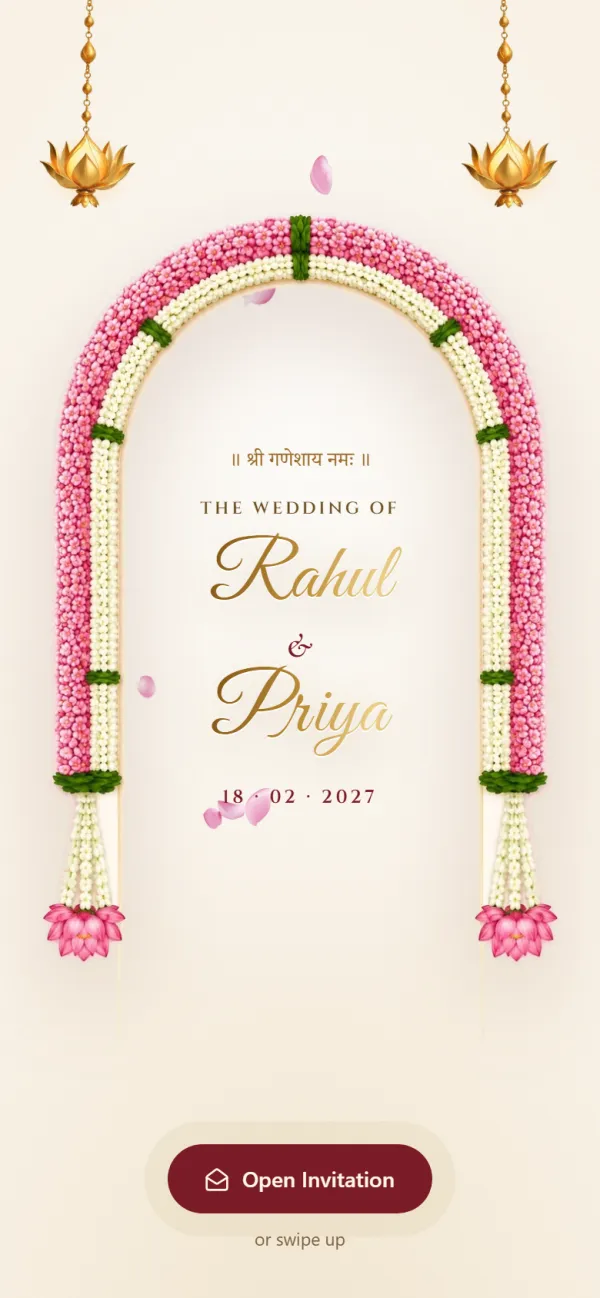
Most common: “ॐ श्री गणेशाय नमः” — Om Shree Ganeshaya Namah
Alternative: “शुभ विवाह” — Shubh Vivah, “auspicious wedding”
Auspicious colours for Hindu invitations
- Red — the most auspicious colour, linked with shakti and new beginnings
- Gold — prosperity and wealth
- Orange and saffron — sacred and auspicious
- Pink — love and happiness
Colours many families avoid: black (considered inauspicious) and plain white (associated with mourning in many Hindu communities).
Traditional Hindu invitation wording format
Hindu invitations follow a set order — the parents invite the guests, not the couple themselves:
- Religious blessing (Om Shree Ganeshaya Namah)
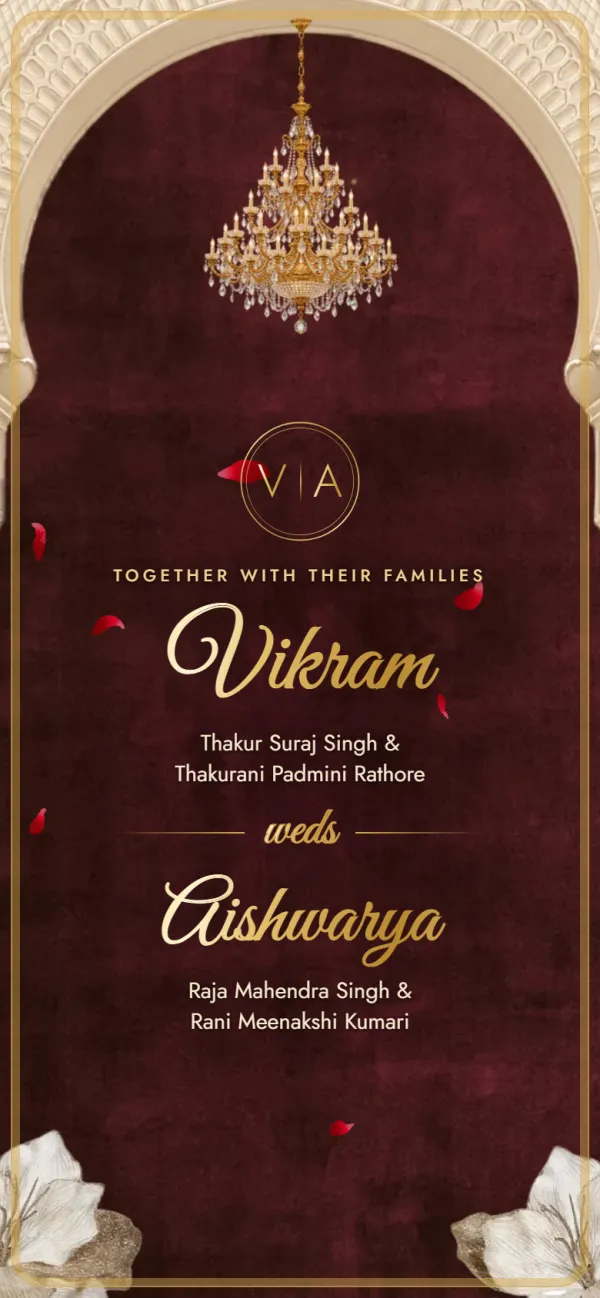
- Parents' names (“Shri Rajesh Sharma & Smt. Sunita Sharma request…”)
- The daughter's or son's name (“…the marriage of their daughter Priya…”)
- The spouse's name and parents (“…with Rahul, son of Shri Vikram Verma…”)
- Date, time and venue of each function
- Contact information
For complete samples, see our Hindu wedding invitation wording guide.
The multi-card tradition
Traditional Hindu weddings often had separate cards or inserts for each ceremony:
- Engagement (Sagai or ring ceremony)
- Mehendi
- Sangeet
- Wedding (the main Vivah ceremony)
- Reception
The modern approach: one digital Hindu wedding invitation that lists every function with its own date, time and venue — cheaper, and much easier for guests to keep track of.
Muslim Wedding Invitation Customs
Islamic traditions and elements
Sacred elements
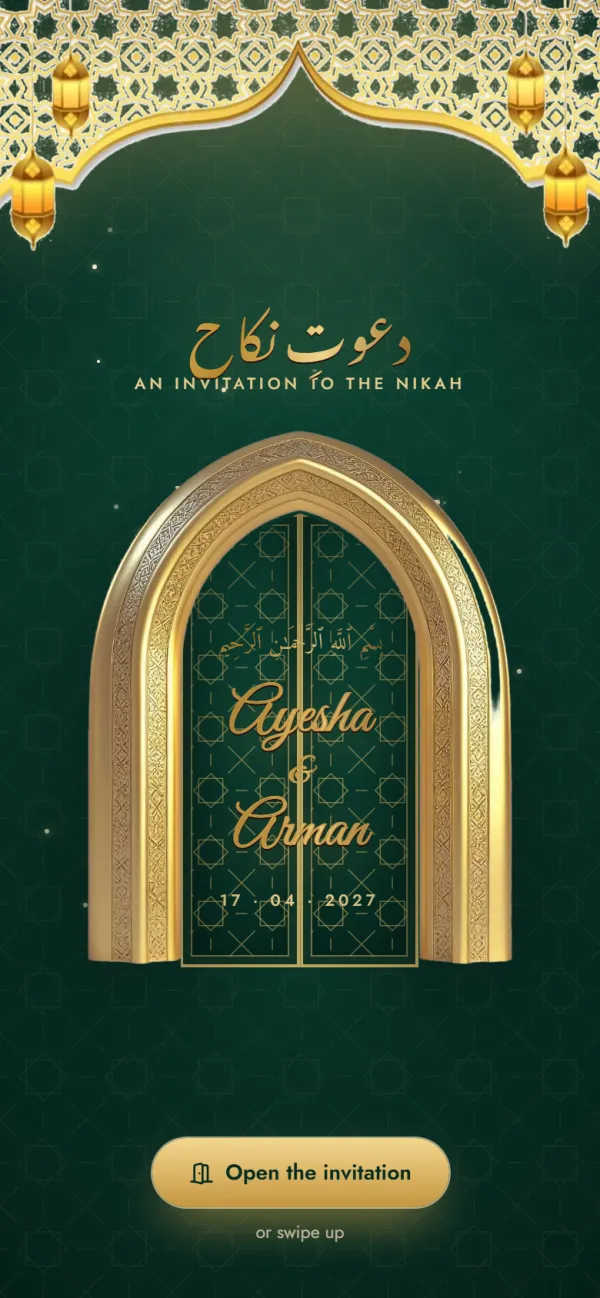
- Bismillah: “In the name of Allah” at the top of the invitation
- A Quranic verse: often Surah Ar-Rum (30:21), about marriage
- Islamic patterns: geometric and arabesque designs rather than figures
- Crescent and star: used by some families
- Calligraphy: elegant script for the names
Traditional blessing
بِسْمِ ٱللَّٰهِ ٱلرَّحْمَٰنِ ٱلرَّحِيمِ
“Bismillah ir-Rahman ir-Rahim” — In the name of Allah, the Most Gracious, the Most Merciful.
Auspicious colours for Muslim invitations
- Green — the colour most associated with Islam
- Gold — elegance and prosperity
- White — purity and peace
Nikah and Walima invitation format
Muslim weddings usually have two main ceremonies, each with its own section on the invitation:
1. Nikah ceremony (the marriage contract)
The religious ceremony at a mosque, hall or home. Families often mention the bride's wali (guardian) and the Qazi or Imam who will officiate; the mahr is sometimes noted too.
2. Walima reception
The celebration hosted by the groom's family after the Nikah, usually at a banquet hall or hotel. Include the venue, time and any dress code.
Many families also host a Mehndi night before the Nikah. The Muslim wedding invitation template opens with Bismillah and lists Mehndi, Nikah and Walima, each with its own venue and map link.
Sikh Wedding Invitation Customs
Sikh traditions and symbols
Sacred symbols
- Ik Onkar (ੴ): “One God”, the foundation of Sikh belief
- Khanda: the Sikh emblem
- Guru Granth Sahib: the ceremony takes place in its presence
- Phulkari: traditional Punjabi embroidery patterns
Traditional blessing
Most common: “ੴ” — Ik Onkar, One Universal Creator
Or: “ਵਾਹਿਗੁਰੂ ਜੀ ਕਾ ਖ਼ਾਲਸਾ, ਵਾਹਿਗੁਰੂ ਜੀ ਕੀ ਫ਼ਤਹਿ” — Waheguru Ji Ka Khalsa, Waheguru Ji Ki Fateh
Vibrant Punjabi colours
Sikh weddings celebrate with bright, joyful colours that reflect Punjabi culture: saffron and orange, yellow, royal blue and magenta.
Anand Karaj ceremony invitation
The Anand Karaj (blissful union) is the Sikh wedding ceremony, held at a Gurdwara. The invitation should include:
- The Gurdwara's name and full address
- The ceremony time — usually in the morning
- Langar (the community meal) after the ceremony
- A gentle request for guests to cover their heads
The Sikh wedding invitation template opens with ੴ ਸਤਿ ਨਾਮੁ and lists Mehndi, Anand Karaj and Reception.
Christian Wedding Invitation Customs
Christian traditions
Traditional elements
- The cross: a sign of faith
- Wedding rings: eternal love
- Doves: peace and the Holy Spirit
- Floral wreaths: beauty and celebration
- A Bible verse: often from 1 Corinthians 13
Traditional blessing
“May the Lord bless this union”
Popular verse: “Love is patient and is kind…” — 1 Corinthians 13:4–7
Classic Christian wedding colours
- White — purity
- Gold — elegance and celebration
- Cream and ivory — timeless and soft
Church ceremony and reception format
Christian wedding invitations in India typically include:
- The church's name and address
- The name of the Father or Pastor officiating
- The reception venue — usually separate from the church
- The expected dress code
The Christian wedding invitation template lists the Engagement, Wedding Ceremony and Reception, each with its own venue and map link.
Modern Adaptations: Honoring Tradition with Digital Invitations
How do you honour old traditions with a modern digital invitation? It's simpler than it sounds: keep the blessing, the family-led wording and the full list of functions — and let the link handle the practical details.
- Hindu TraditionalHindu wedding
- Muslim ElegantNikah & Walima
- Sikh VibrantAnand Karaj
- Christian ClassicChristian wedding

How digital preserves tradition
- Templates made for each tradition, opening with its blessing — Shree Ganeshaya Namah, Bismillah, Ik Onkar
- Both family names and your own welcome message, so the traditional “parents invite” wording still fits
- Colours suited to each tradition — gold for Hindu, green and gold for Muslim, orange and blue for Sikh weddings
- Every function listed — Mehendi, Sangeet, Nikah, Walima, Anand Karaj, the church ceremony and the reception
Modern conveniences added
- Google Maps directions to the Gurdwara, church, mosque or banquet hall
- One-tap calls to family elders when guests have a question
- WhatsApp sharing — how Indian families already communicate
- No paper waste, no courier and nothing to lose
Best of both worlds: the hybrid approach
If your family is very traditional, consider a hybrid approach:
- Print a small number of cards for elders and the family temple — a physical keepsake
- Create a full digital invitation with every function, venue and map
- Share the link with everyone, including those who received a printed card
Traditional relatives get their card, and everyone still has directions and contact numbers on their phone. Pair it with a personal message:
आदरणीय [Name] जी, सादर प्रणाम 🙏 आपके आशीर्वाद से हमारे घर विवाह का शुभ अवसर है। सभी कार्यक्रमों का विवरण और स्थान इस निमंत्रण में है: shaadiinvitation.com/rahul-weds-priya आपकी उपस्थिति हमारे लिए सौभाग्य होगी।
Honour your traditions — digitally
Templates for Hindu, Muslim, Sikh and Christian weddings with their blessings and functions ready to fill in. Free to design and preview, no sign-up.
Frequently asked questions
Most Indian wedding invitations open with a religious blessing (Om Shree Ganeshaya Namah for Hindu, Bismillah for Muslim, Ik Onkar for Sikh, a Bible verse for Christian weddings), are issued by the parents or elders, use colours considered auspicious in that tradition, list every function with its date, time and venue, and are sent several weeks ahead — often with the first card offered at the family temple.
Red is the most auspicious colour, often paired with gold for prosperity; saffron, orange, maroon and pink are also popular. Many families avoid black and plain white, which are associated with inauspicious occasions and mourning. Modern Hindu invitations often use cream or peach with gold accents.
Muslim (Nikah) invitations usually open with Bismillah or a Quranic verse, favour green, gold and white with geometric patterns, and list the Nikah and Walima separately, often with a Mehndi night. Hindu invitations open with a prayer to Ganesha, favour red and gold, and list several functions such as Haldi, Mehendi, Sangeet, the wedding and the reception.
Hindu: Om Shree Ganeshaya Namah or Shubh Vivah. Muslim: Bismillah ir-Rahman ir-Rahim. Sikh: Ik Onkar, or Waheguru Ji Ka Khalsa, Waheguru Ji Ki Fateh. Christian: “May the Lord bless this union” or a verse such as 1 Corinthians 13:4–7. The blessing traditionally sits at the very top of the invitation.
In Indian culture a marriage unites two families, not just two people, so parents or elders formally invite guests on the family's behalf — a mark of respect. The wording often reads: “Shri [Father's name] & Smt. [Mother's name] request the honour of your presence at the marriage of their daughter/son…”. Less formal weddings may adapt this, but naming the parents remains the norm.
Yes, when they're chosen with care. Pick a template made for your tradition, keep the blessing and the family-led wording, and send it with a warm personal message. Many families print a few cards for elders and send the link to everyone else, so guests also get map directions and the family's phone numbers.
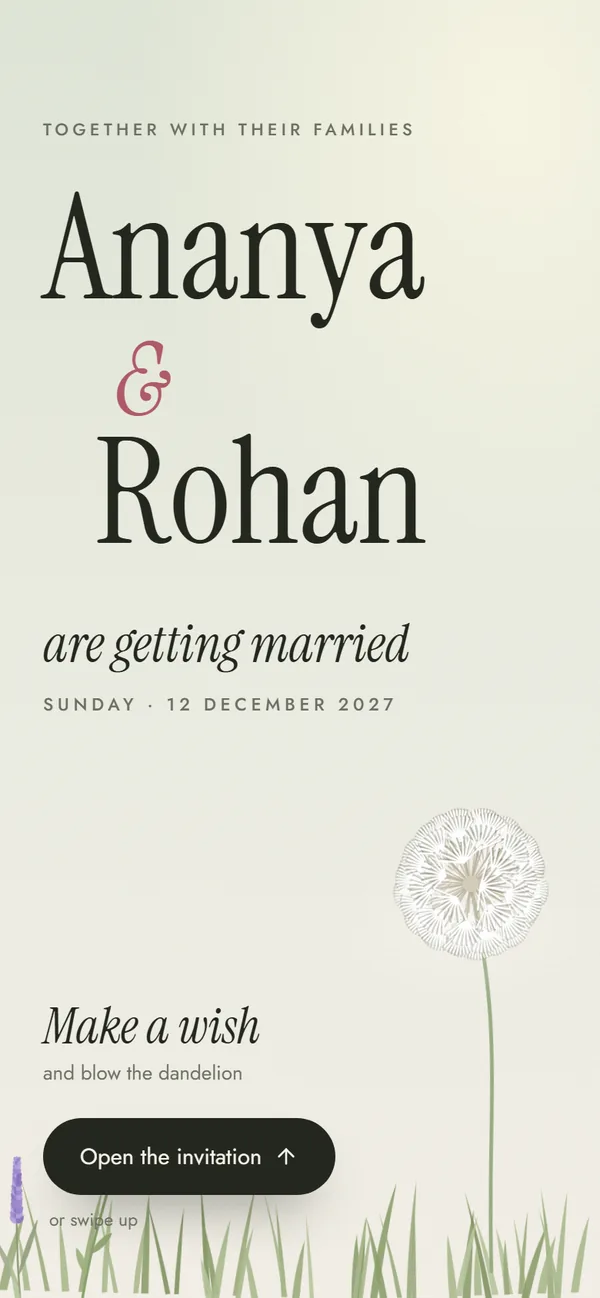
Yes. Choose neutral colours such as cream, gold or white, give both traditions equal prominence, and list each family's ceremonies — for example the pheras and the Nikah, or a church wedding followed by a Hindu reception. The Modern Minimal template, which opens with “Together with our families”, is a good neutral choice.
Found this useful?
Send it to whoever is helping with the invitations.
Make your wedding invitation
Every function, map and family number in one link. Free to design and preview, no sign-up.
Create Your InviteBrowse templates