Etiquette8 min read
Wedding Invitation Etiquette: Plus-One, Kids & Guest Rules Guide 2026
Who gets a plus-one, whether to invite children, how to word an adults-only wedding and how to handle awkward guest-list moments politely — with wording you can borrow.
Wedding invitation etiquette can be confusing. Who gets a plus-one? Should you invite children? How do you word “adults only”? And what about distant relatives you haven't seen in years? These questions stress out almost every couple planning a wedding.
In this guide you'll find the modern rules for wedding invitations — who to invite, plus-one etiquette, children, polite wording, and what to say in awkward situations. Use them to keep your guest list manageable without offending anyone.
Plus-One Rules: Who Gets a Plus-One & Who Doesn't
Who should get a plus-one
- Married guests. Always invite both spouses — even if you've never met one of them. Inviting only one half of a married couple is a major etiquette mistake.
- Engaged couples. Treat them like married couples and invite both partners together.
- Long-term relationships (living together or dating a year or more). Offer a plus-one out of courtesy — you don't need to know their partner well to acknowledge the relationship.
- Guests who won't know anyone else. If someone is your only colleague invited, or the only guest from a particular circle, a plus-one saves them a lonely evening.
- Your wedding party. Bridesmaids, groomsmen and the friends doing the heavy lifting deserve a plus-one as a thank-you, even if they're single.
Who doesn't need a plus-one
- Single guests. Friends and relatives who aren't in a relationship don't automatically bring a date — they'll have plenty of people to celebrate with. If they ask, explain budget or venue limits politely.
- Casual daters (under about six months). You're not obliged to invite a very new partner.
- Guests who'll know lots of other people. A cousin in a big family group or a friend whose whole gang is invited doesn't need one.
- Children and teenagers. They come with their parents.
How to show who is invited
On a printed card, the names on the envelope say it all: “Amit Sharma & Guest” or “Amit Sharma + 1” for a plus-one, “Amit Sharma & Priya Patel” if you know the partner's name, and just “Amit Sharma” when there's no plus-one.
A digital invitation link is the same for every guest, so say it in the message you send with it instead — for example “We'd love to see you and Priya on the 15th!” or “We're keeping numbers small, so the invitation is just for you.”
Should You Invite Children to Your Wedding?
Option 1: Kids welcome at the wedding
Pros
- Parents don't need to find babysitters, so they can attend more easily
- Makes the wedding feel family-friendly and relaxed
- Children bring energy — and make lovely photos
- Avoids upsetting relatives with young children
Cons
- Crying babies during the ceremony
- Children running around at the reception (a safety worry)
- Higher catering costs — children count towards the headcount
- A less formal atmosphere
Option 2: Adults-only wedding
Pros
- A more formal, elegant atmosphere
- No disruptions during the ceremony or speeches
- Lower catering costs with fewer guests
- Parents can relax and enjoy themselves
Cons
- Some parents may decline if they can't arrange childcare
- Relatives who wanted to bring their children may be hurt
- Harder for out-of-town guests travelling with kids
How to politely communicate “adults only”
Method 1: Address the invitation to the adults
Name only the parents — no “and family” — on the envelope of a printed card, or in the message that goes with your invitation link:
Mr. Amit Sharma & Mrs. Priya Sharma
Method 2: Add a polite note
We love your little ones, but our wedding will be an adults-only celebration. We hope you can join us for a child-free evening!
While we love your children, we have decided to keep our wedding an adults-only event. Thank you for understanding!
Method 3: Mention the number of seats
On a printed RSVP card, or in your message:
We have reserved 2 seats in your honour.
Who to Invite (& Who You Can Skip Without Guilt)
Who must be invited
- Immediate family — parents, siblings, grandparents
- Close friends you talk to regularly
- Aunts, uncles and first cousins (if your family is close)
- Coworkers you socialise with outside work
- People who invited you to their wedding
- Your wedding party, of course
Who you can skip (guilt-free)
- Distant relatives you haven't seen in five years or more
- Friends you've drifted apart from
- Coworkers you only talk to at work
- Your parents' friends you don't know (unless your parents are hosting and insist)
- Exes — it's awkward for everyone
- Social media “friends” you never meet in person
The A-list, B-list, C-list strategy
A tiered list helps you fill the venue without going over capacity:
- A-list (must invite): immediate family, best friends, wedding party — invite about eight weeks before.
- B-list (if space allows): extended family, work friends — invite about six weeks before.
- C-list (only if A/B guests decline): acquaintances — invite four to five weeks before, if needed.
Keep track of who has confirmed in a simple shared sheet — our guide to tracking wedding RSVPs online shows how.
Proper Wedding Invitation Wording Examples
Our Hindu wedding invitation wording guide has 50+ detailed samples. Here are two quick examples:
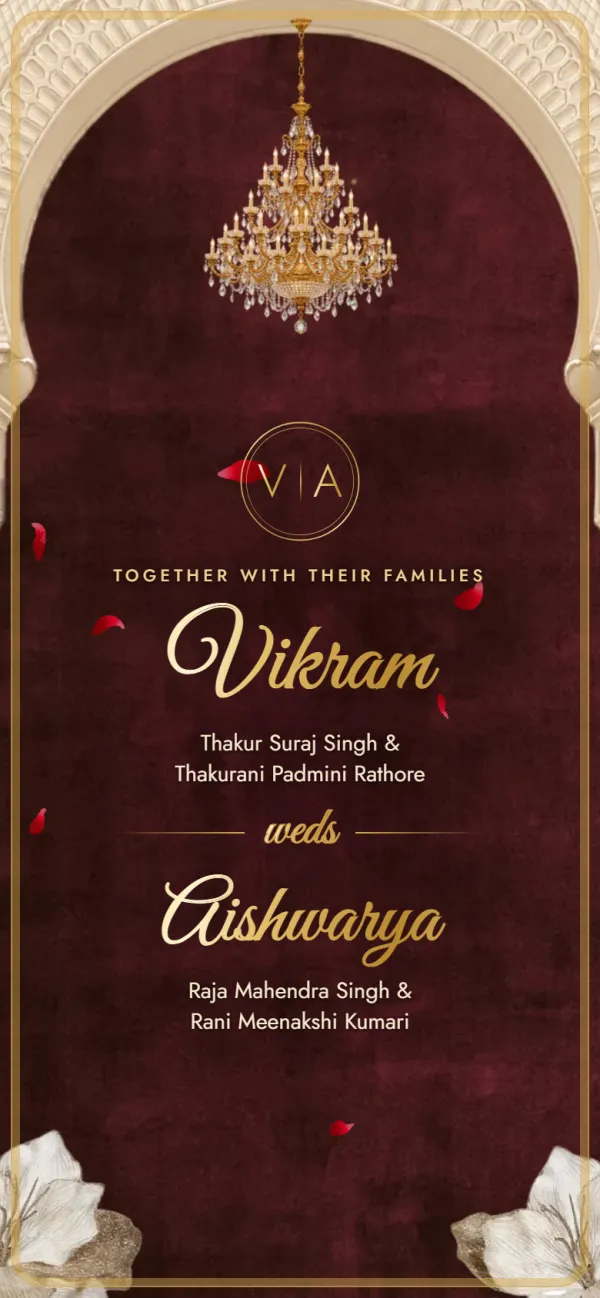
Shri Rajesh Kumar Sharma & Smt. Sunita Sharma request the honour of your presence at the sacred union of their daughter Priya Sharma with Rahul Verma son of Shri Vikram Verma & Smt. Neeta Verma on Sunday, 15th December 2026 at 7:00 PM Hotel Taj Palace, New Delhi
Join us as we say "I do"! Priya & Rahul are getting married! December 15, 2026 | 7:00 PM Hotel Taj Palace, Delhi Dinner & dancing to follow RSVP by November 20
Handling Awkward Invitation Situations
However carefully you plan, a few awkward conversations are almost guaranteed. Kind, clear wording keeps them short — copy these and adjust the details.
Situation 1: A guest assumes they get a plus-one (but they don't)
Hi [Name]! We'd love to have you at our wedding, but because of venue capacity and budget we can't accommodate plus-ones for single guests. We hope you understand and can still join us!
Situation 2: A guest asks to bring their kids to an adults-only wedding
We love your children, but we've decided to keep our wedding an adults-only celebration. We hope you can arrange childcare and join us for the evening!
Situation 3: Someone you didn't invite asks why
Because of venue capacity and budget, we had to make some tough decisions and keep the guest list small — just immediate family and very close friends. We hope you understand!
Situation 4: A guest says “yes”, then cancels at the last minute
Be gracious: “No problem, we understand — thanks for letting us know.” Then update your headcount, and if there's still time, invite someone from your B-list or C-list.
Remember: It's Your Wedding, Your Rules
Wedding invitation etiquette offers guidelines, not laws. Make the decisions that work for your budget, your venue and your family. Be polite but firm — you can't please everyone, so prioritise what matters to you.
Ready to send yours? See our invitation timeline and how to create a digital invitation.
Create your wedding invitation
Every function, venue map and family phone number in one link, ready to share on WhatsApp. Free to design and preview, no sign-up.
Frequently asked questions
No. Plus-ones aren't automatic for single guests. Traditional etiquette offers them to married or engaged guests and people in serious long-term relationships (a year or more). Single guests can socialise with everyone else at the wedding. If someone asks, politely explain your venue and budget limits.
No. Adults-only weddings are perfectly acceptable. Make it clear by addressing the invitation to the adults only and adding a short, polite note. Some parents may decline if they can't arrange childcare, but most will understand.
A digital invitation link is the same for every guest, so say it in the message you send with it — for example “We'd love to see you and Priya” for a couple, or “the invitation is just for you” when there's no plus-one. On printed cards, the names on the envelope do the job.
Only invite coworkers you're friends with outside work — people you have lunch with or message about non-work things. You don't have to invite your whole team or your boss, and inviting one colleague doesn't mean you must invite them all.
Be honest but kind: “Because of venue capacity and budget, we had to keep the guest list small — only immediate family and very close friends.” Don't over-explain or apologise excessively. Most people will understand.
Traditional etiquette says no — gift details on the main invitation can look like you're asking for presents. Share them by word of mouth when guests ask, or in a separate message. Avoid blunt lines like “No gifts please”; if you'd prefer no gifts, “Your blessings are our gift” is a gentler way to say it.
Found this useful?
Send it to whoever is helping with the invitations.
Make your wedding invitation
Every function, map and family number in one link. Free to design and preview, no sign-up.
Create Your InviteBrowse templates